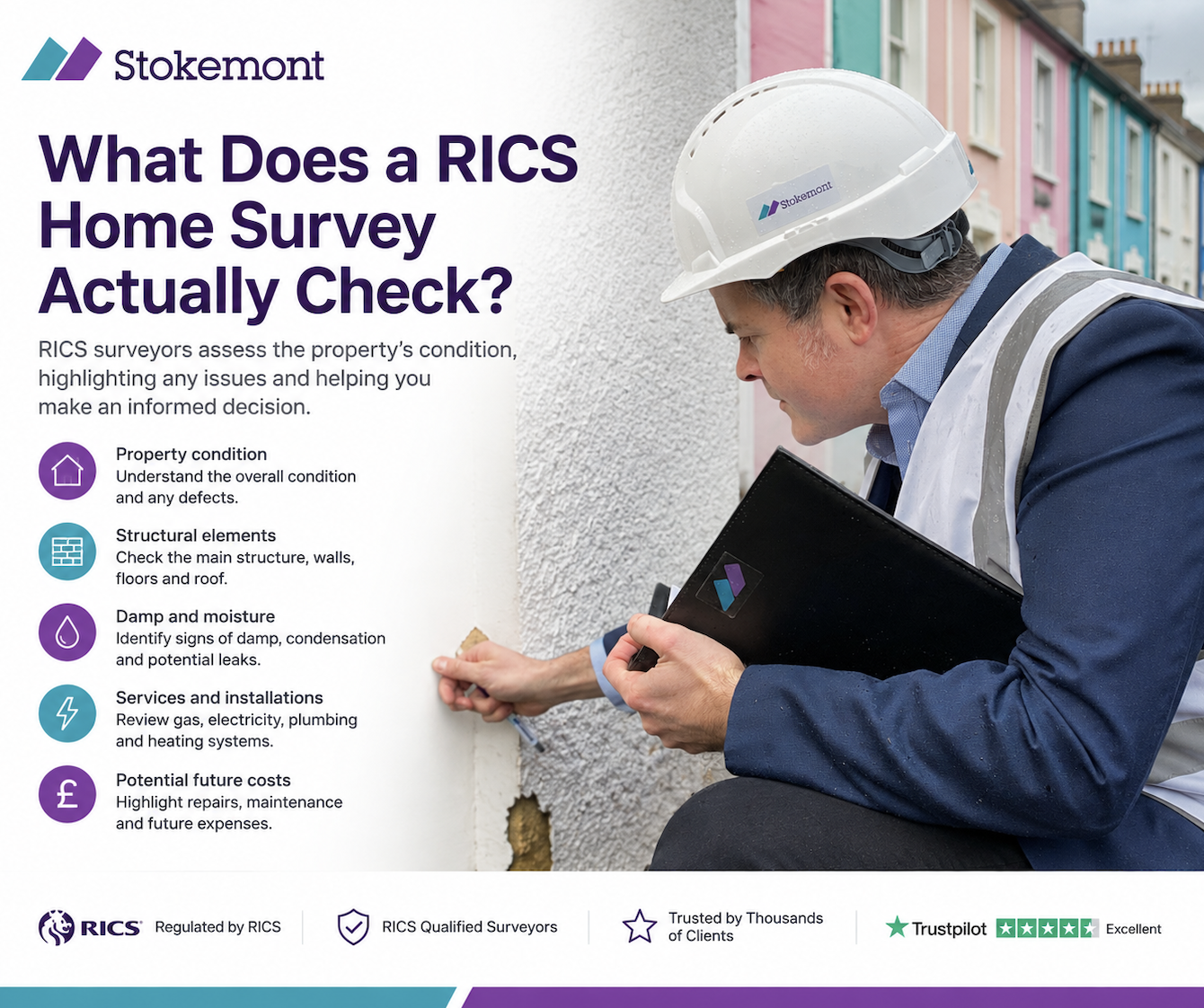
A RICS Home Survey is a visual inspection of the property intended to provide the purchaser with an informed assessment of its condition.
The precise scope depends on the level of survey instructed, but the inspection will generally consider the accessible parts of the building and its grounds.
What areas are inspected?
A survey can consider matters including:
Roofs and chimneys
The surveyor will inspect accessible and visible roof coverings and structures, together with chimneys where they can be safely inspected.
External walls
The external elevations, wall finishes, pointing, signs of movement and other visible defects are considered.
Windows and doors
The condition of accessible windows and doors is assessed, including visible deterioration, defects and operational issues where appropriate.
Internal areas
Rooms, walls, ceilings, floors, joinery and other accessible elements are visually inspected.
Damp and moisture
The surveyor will look for visible signs of dampness and moisture-related defects. Where appropriate, moisture readings may assist the inspection, although this does not amount to a specialist damp investigation.
Drainage and rainwater goods
Visible gutters, downpipes, gullies and drainage features are considered where accessible.
Alterations and extensions
The surveyor will consider visible evidence of alterations, extensions and other changes to the property and identify concerns where appropriate.
Does the survey test everything?
No. We try, but there are of course always going to be limitations. A RICS Home Survey is not a destructive investigation and does not involve dismantling the building.
Concealed defects may therefore remain undiscovered. Areas that are inaccessible, unsafe or obstructed may also fall outside the inspection.
Specialist testing, such as electrical testing, gas safety testing, drainage CCTV or asbestos surveys, is not automatically included simply because you have commissioned a home survey.
Where something observed during the inspection warrants further investigation, the surveyor can recommend that an appropriate specialist is instructed.
Does the survey guarantee the property is defect-free?
No.
The purpose of the survey is to identify visible defects and provide professional advice based upon the condition observed at the time of inspection.
Buildings are complex and some defects cannot reasonably be identified without opening up, testing or specialist investigation.
Stokemont’s advice
A RICS Home Survey is not intended to replace every specialist investigation that may be required. Its purpose is to provide an independent assessment of the property and identify matters that may affect your decision to purchase.
At Stokemont, our surveyors clearly identify significant defects, maintenance concerns and matters where further investigation is recommended.
If you are buying a property and want to understand its condition before committing to the purchase, contact Stokemont to discuss the appropriate survey.
We also offer an industry-first instant survey quote feature, allowing you to obtain a fixed-price quotation for:
A Commercial Pre-Purchase Survey.
Through the links, you can quickly see the cost of the survey, our expected timescales and how we approach these important inspections on behalf of our clients.