
This article is part of our typical property defects series and based upon issues our surveyors regularly locate during RICS Level 2 Surveys, Level 3 Surveys and Defect Analysis Reports.
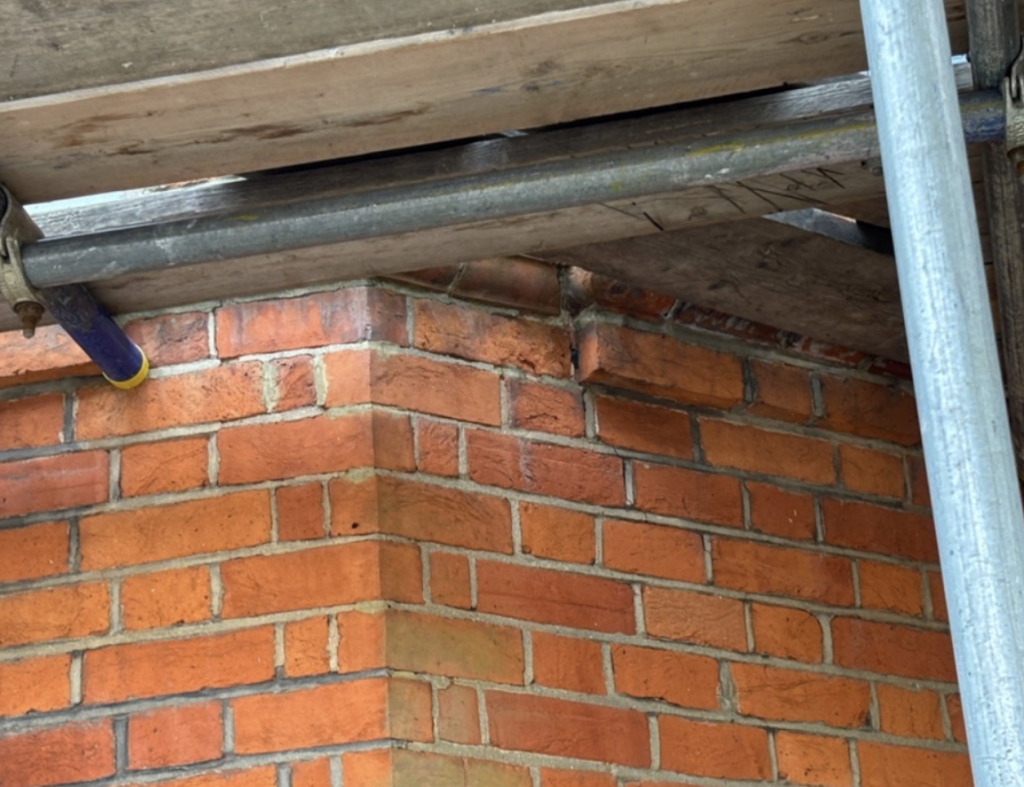
Pointing is the mortar between bricks. It may seem like a small part of a property, but it plays an important role in protecting the external walls from the weather.
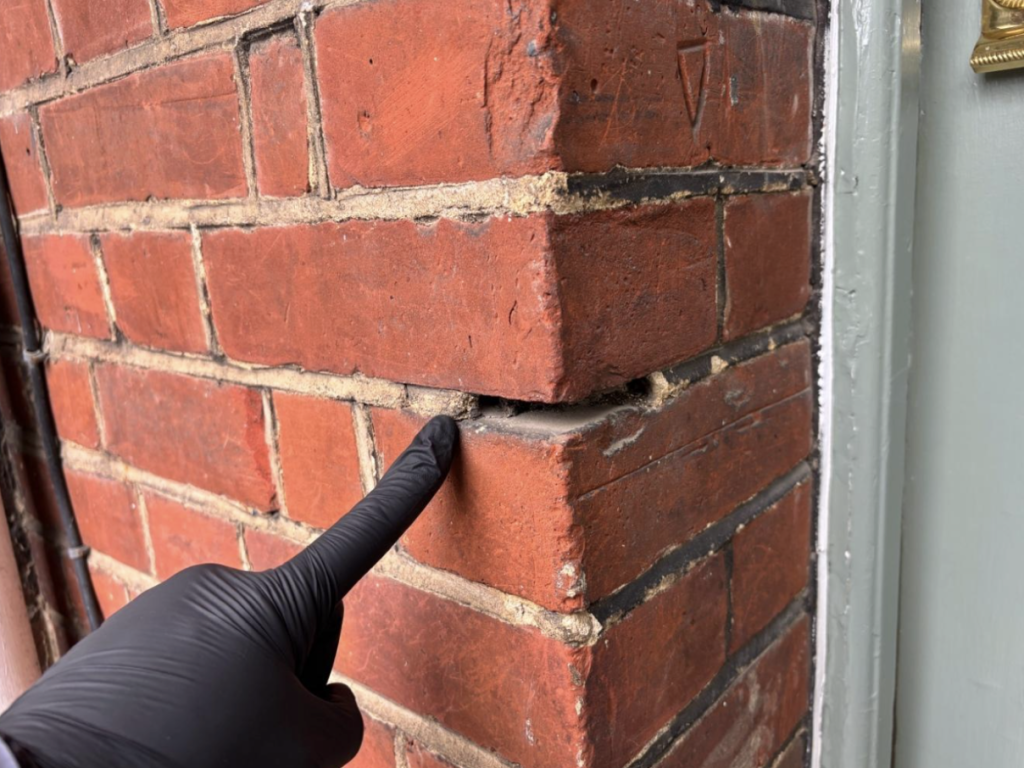
Over time, pointing can crack, crumble, loosen, or fall away completely. This is known as missing pointing or defective pointing.
If left untreated, missing pointing can allow rainwater to penetrate the wall, leading to damp, frost damage, brick deterioration, and more costly repairs.
What causes missing pointing?
Pointing naturally weathers over time. External walls are constantly exposed to rain, frost, wind, pollution, sunlight, and temperature changes. As the mortar ages, it can become weaker and start to break down.
Common causes include:
- general age-related wear;
- frost damage;
- weather exposure;
- poor previous repairs;
- hard cement mortar on older brickwork;
- movement in the building;
- leaking gutters or downpipes;
- vegetation growing against the wall;
- repeated wetting and drying.
Older properties are often more vulnerable, especially where the original lime mortar has been replaced with hard cement mortar. Cement mortar can sometimes trap moisture in softer bricks, causing further deterioration over time.
Why does missing pointing matter?
Pointing helps keep the wall weather-resistant.
When mortar joints are missing or defective, gaps can open between the bricks. These gaps allow water to enter the wall more easily. Once moisture gets into the brickwork, it can cause internal damp, damage plaster finishes, and increase the risk of brick spalling.
During colder weather, trapped water can freeze and expand. This can make the surrounding brickwork and mortar deteriorate more quickly.
What may begin as a small maintenance issue can therefore become a larger repair if ignored.
What are the signs of missing pointing?
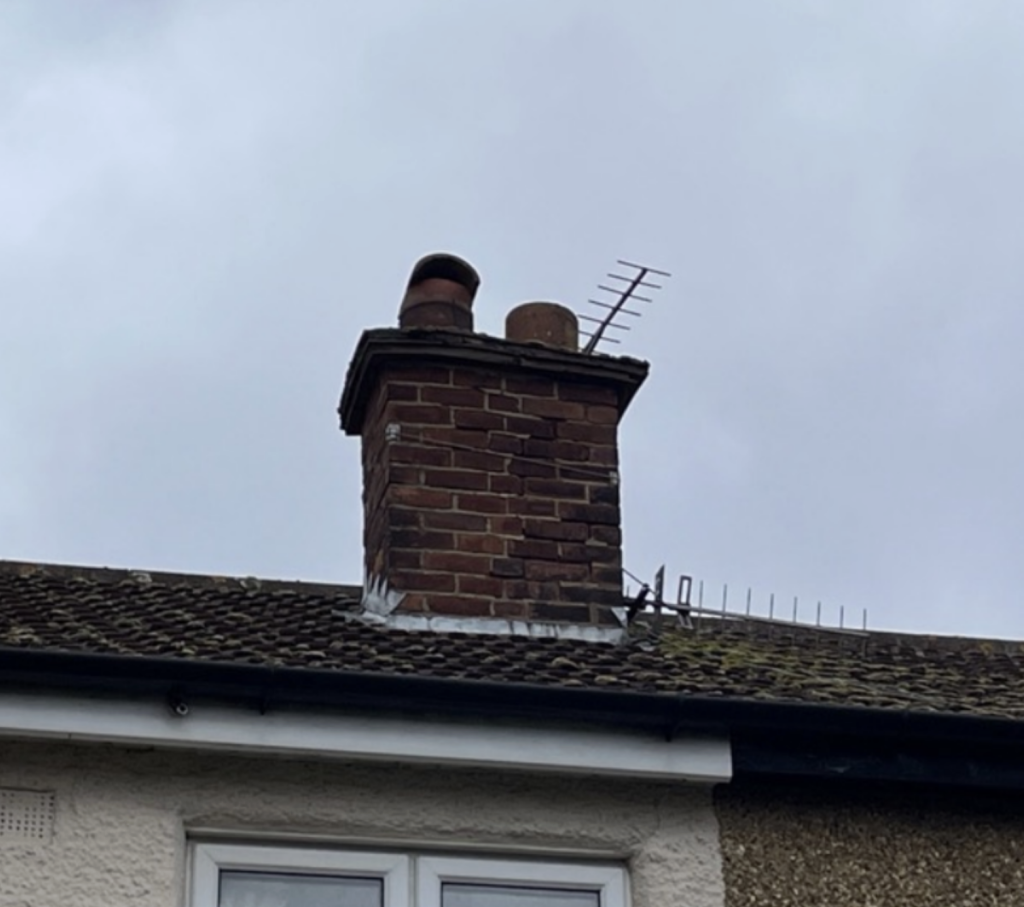
Missing pointing can often be seen from ground level, particularly on exposed elevations, chimney stacks, garden walls, parapet walls, and areas around windows and doors.
Signs to look out for include:
- gaps between bricks;
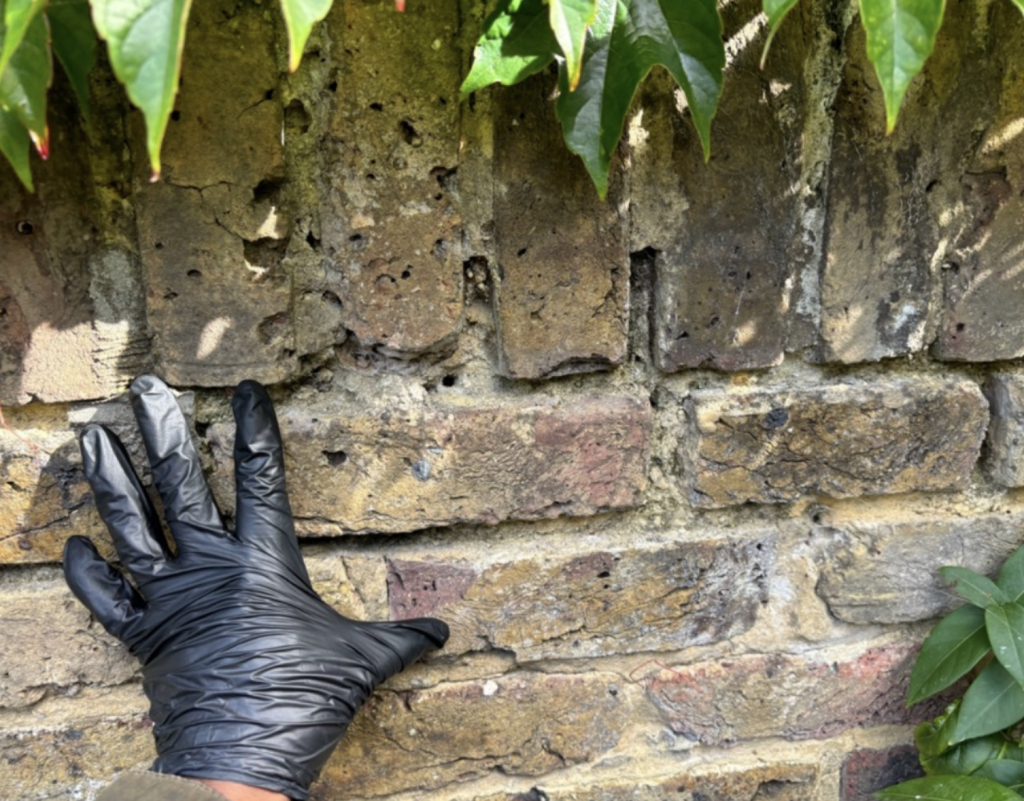
- crumbling or loose mortar;
- cracks along mortar joints;
- recessed or hollow joints;
- damp staining internally;
- loose brickwork;
- areas where mortar has fallen away;
- moss or vegetation growing in the joints.
You may also notice that some sections of wall look more weathered than others, especially on elevations that face driving rain.
Can missing pointing cause damp?
Yes. Missing pointing can allow rainwater to penetrate through the external wall.
This does not always mean water will immediately appear inside the property, but over time it can increase moisture levels within the wall. This may lead to damp staining, peeling paint, damaged plaster, mould growth, or musty smells.
If damp is present internally, it is important to check whether defective pointing, cracked render, leaking gutters, or damaged brickwork may be contributing to the issue.
How is missing pointing repaired?
The usual repair is known as repointing.
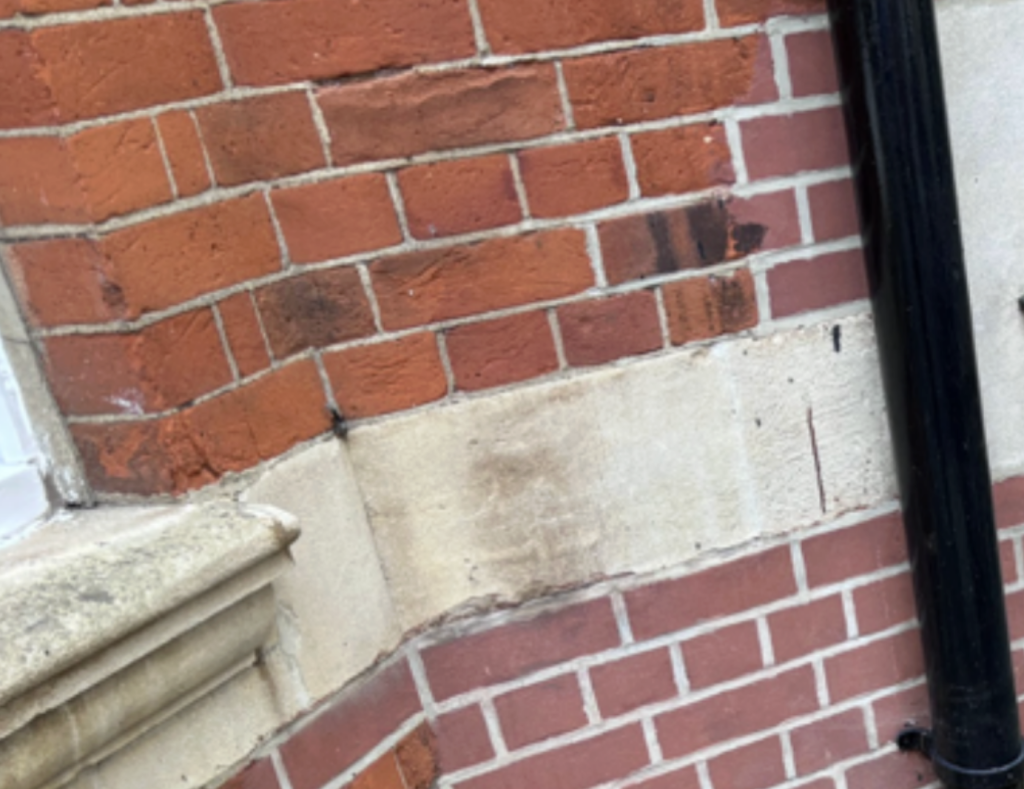
This involves removing the loose, cracked, or defective mortar and replacing it with new mortar. The new pointing should be suitable for the age, type, and condition of the property.
It is important that the new mortar is not simply applied over the top of the old defective pointing. The failed mortar should be properly raked out first so the new mortar can bond correctly.
For older properties, a lime-based mortar may be more appropriate than a hard cement mortar. Lime mortar is more breathable and flexible, which can help older walls manage moisture more effectively.
Why matching the existing pointing matters
Repointing should be carried out carefully.
The new pointing should match the existing property as closely as possible in colour, texture, profile, and finish. Poorly matched pointing can stand out visually and may affect the appearance of the property.
More importantly, using the wrong mortar can cause further problems. A hard cement mortar on soft older brickwork can sometimes lead to trapped moisture and brick damage.
This is why it is important to use a competent contractor who understands the type of building they are working on.
Should buyers be concerned?
Missing pointing should not automatically put you off buying a property.
In many cases, it is a common maintenance issue and can be repaired. However, buyers should understand the extent of the defect and whether it is linked to other issues such as damp, damaged brickwork, leaking gutters, or poor previous repairs.
If the pointing is missing across large areas, or if it affects chimney stacks, parapets, or high-level walls, the cost of access and repair may be higher.
A survey can help identify whether the issue is minor, localised, or part of wider external deterioration.
Stokemont’s advice
If you notice missing pointing, it is best to deal with it before water begins to cause further damage.
Early repointing can help protect the brickwork, reduce the risk of damp, and prevent more expensive repairs later. It can also improve the appearance and long-term condition of the property.
At Stokemont, we explain defects clearly and practically, so you understand what is happening, what it may mean, and what action may be needed.
Concerned about missing pointing?
If you are buying a property, selling a property, or concerned about the condition of your brickwork, Stokemont can help.
Contact Stokemont today to arrange a property survey or defect inspection and receive clear, professional advice before minor issues become more costly to resolve.