
This article is part of our typical property defects series and based upon issues our surveyors regularly locate during RICS Level 2 Surveys, Level 3 Surveys and Defect Analysis Reports.
Damp is one of the most common issues found in homes. It can affect older properties, modern flats, period buildings, extensions, basements, and poorly ventilated rooms.
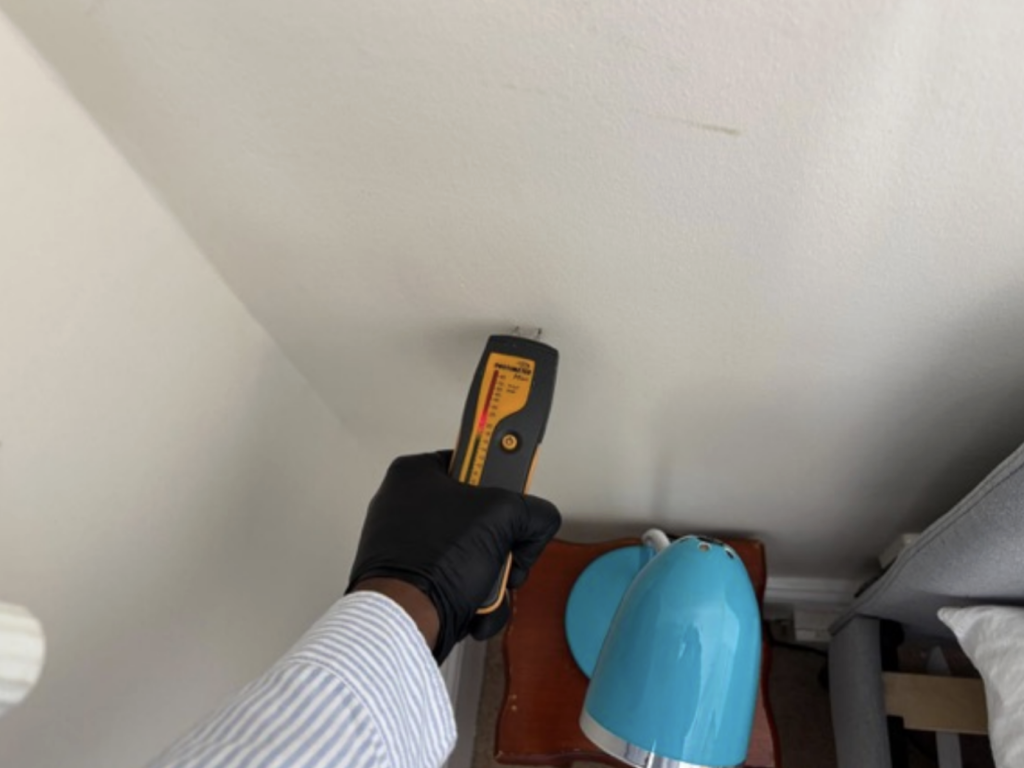
For homeowners, damp can be frustrating and unpleasant. For buyers, it can be worrying, especially if staining, mould, peeling paint, or a musty smell is noticed during a viewing.
The important thing to remember is that damp is not always the same. It can have several different causes, and the right solution depends on identifying where the moisture is coming from.
What are the common signs of damp?
Damp can appear in several ways. Some signs are obvious, while others are more subtle.
Common signs include:
- dark staining to walls or ceilings;
- peeling paint or wallpaper;
- mould growth;
- a musty smell;
- damp or cold patches on walls;
- damaged plaster;
- salt deposits on wall surfaces;
- condensation on windows;
- timber decay;
- softened skirting boards or floorboards.
These signs do not always mean there is a serious problem, but they should be properly assessed.
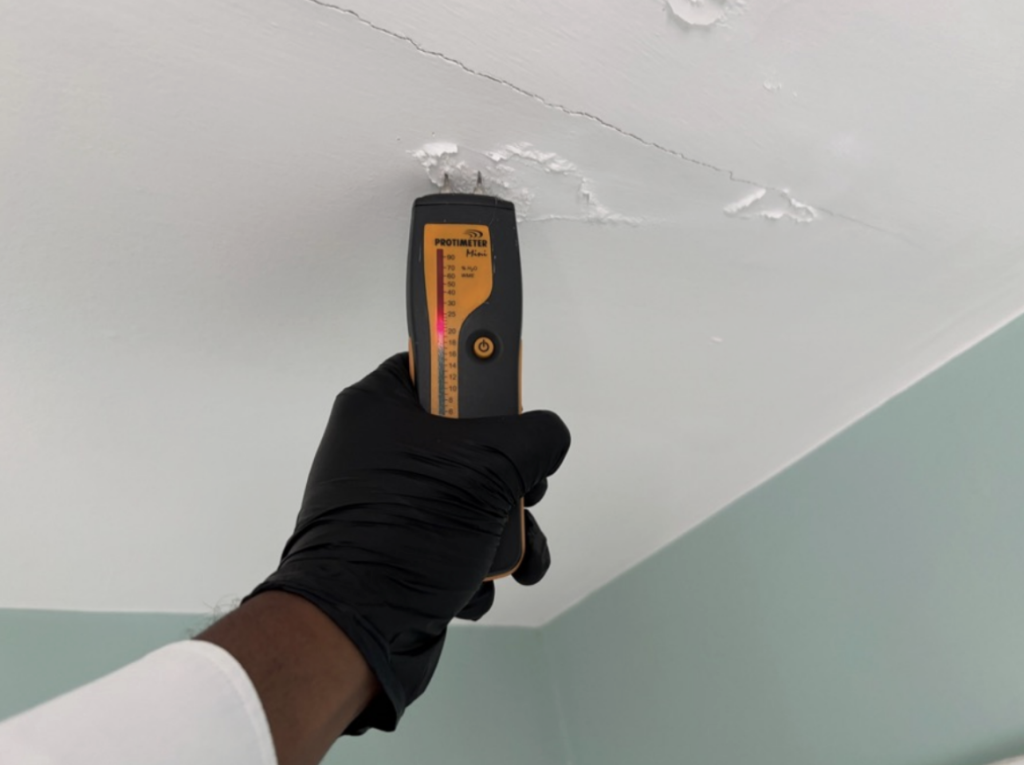
What causes damp?
Damp usually occurs when moisture enters, builds up, or becomes trapped within a property.
The most common causes include:
- condensation;
- leaking gutters or downpipes;
- defective roof coverings;
- cracked render or brickwork;
- poor pointing;
- high external ground levels;
- plumbing leaks;
- poor ventilation;
- blocked air bricks;
- failed or bridged damp-proof courses;
- moisture trapped behind non-breathable finishes.
In many cases, damp is caused by a combination of issues rather than one single defect.
Condensation damp
Condensation is one of the most common forms of damp, particularly in bathrooms, kitchens, bedrooms, and flats.
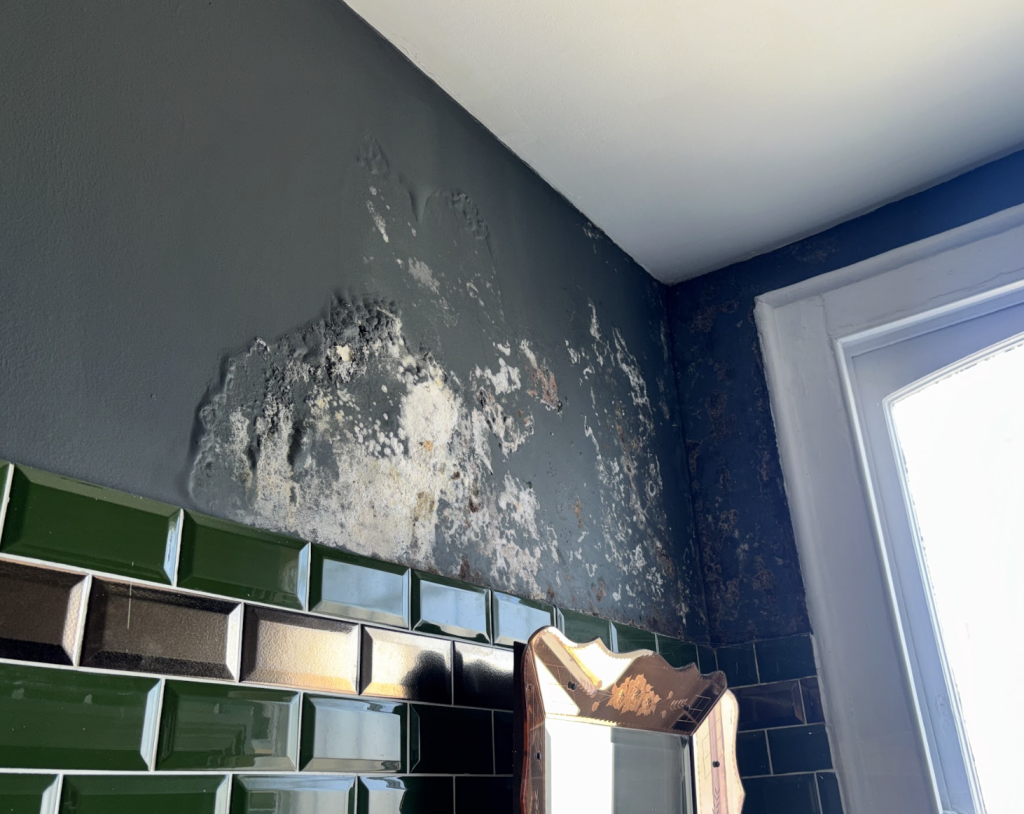
It happens when warm, moist air meets a cold surface. The moisture in the air then turns into water droplets. This is why condensation is often seen on windows, external walls, ceilings, and corners of rooms.
Everyday activities such as cooking, showering, drying clothes indoors, and poor ventilation can all contribute to condensation.
If condensation is left unaddressed, it can lead to mould growth, which may affect both the property and the health of the occupants.
Penetrating damp
Penetrating damp occurs when water enters the property from outside.
This can happen through defective brickwork, cracked render, damaged roofs, leaking gutters, poor flashing details, or failed seals around windows and doors.
Penetrating damp is often more noticeable after heavy rain. It may appear as damp staining to walls or ceilings, usually close to the area where water is entering.
The key is to repair the external defect first. Internal redecoration alone will not solve the issue if rainwater is still getting into the building.
Rising damp
Rising damp occurs when moisture from the ground travels upwards through walls.
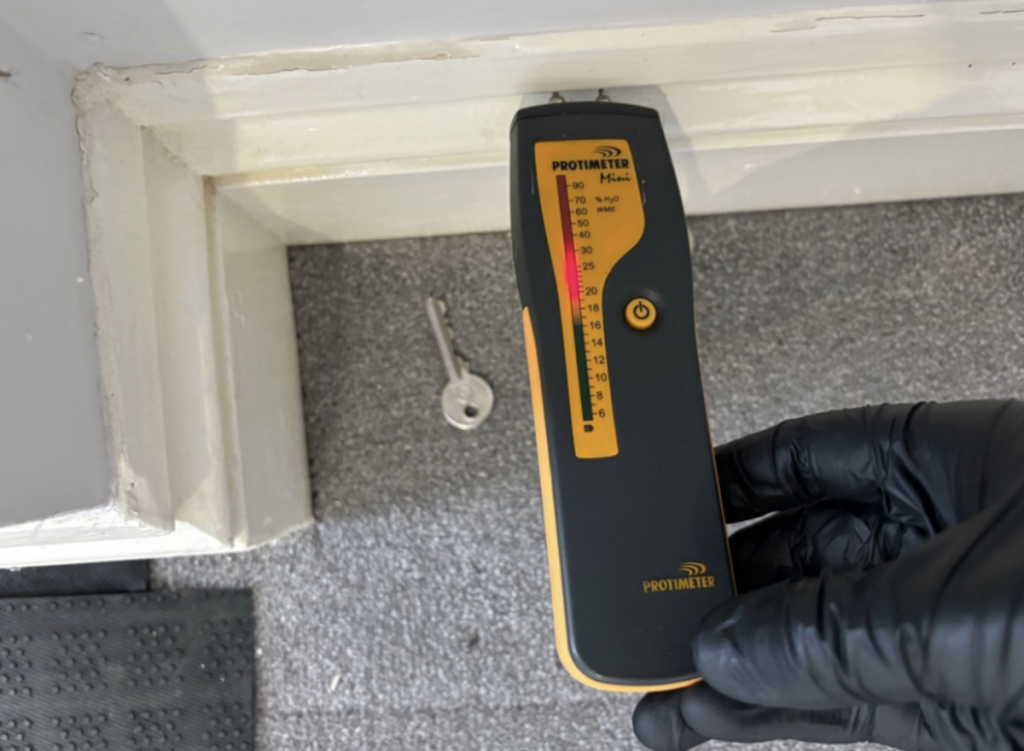
This is usually associated with older properties, defective damp-proof courses, bridged damp-proof courses, or high external ground levels. It may appear as staining, damaged plaster, peeling finishes, or salt deposits at low level.
Rising damp is often discussed, but it should not be assumed without proper investigation. Other issues, such as condensation, leaks, or external bridging, can sometimes be mistaken for rising damp.
Why damp should not be ignored
Damp can worsen over time if the cause is not addressed.
Left untreated, damp may damage plaster, decorations, timber, flooring, skirting boards, and internal finishes. It can also contribute to mould growth and unpleasant living conditions.
In more serious cases, prolonged moisture can affect embedded timbers and hidden areas of the property, leading to decay and further repair costs.
Early investigation can help prevent a relatively minor issue from becoming more expensive to resolve.
Should buyers be concerned?
Damp should not automatically put you off buying a property.
Many damp issues are manageable once the cause is understood. A leaking gutter, poor ventilation, defective pointing, or high external ground level may be capable of repair.
However, buyers should understand the likely cause, extent, and cost before proceeding. This is particularly important where damp is widespread, long-standing, or linked to structural elements, basements, roofs, or hidden timbers.
A survey can help identify whether damp appears minor, localised, or something that requires further investigation.
How can damp be treated?
The right treatment depends entirely on the cause.
Possible solutions may include:
- repairing gutters and downpipes;
- improving ventilation;
- repairing roof defects;
- repointing external brickwork;
- lowering high external ground levels;
- unblocking air bricks;
- repairing plumbing leaks;
- improving heating and airflow;
- removing inappropriate finishes;
- installing or repairing damp-proofing where appropriate.
The most important step is to avoid treating the symptom without addressing the cause. Painting over damp staining or applying a sealant may temporarily hide the problem, but it will not resolve the underlying moisture issue.
Stokemont’s advice
If you notice damp, staining, mould, or a musty smell, it is best to seek advice early.
Damp can be simple, but it can also be misleading. A professional inspection can help identify the likely cause and guide you towards the right next steps.
At Stokemont, we explain damp-related issues clearly and practically, so you understand what is happening, what it may mean, and what action may be needed.
Concerned about damp?
If you are buying a property, selling a property, or concerned about damp in your home, Stokemont can help.
Contact Stokemont today to arrange a property survey or defect inspection and receive clear, professional advice before minor issues become more costly to resolve.