
This article is part of our typical property defects series and based upon issues our surveyors regularly locate during RICS Level 2 Surveys, Level 3 Surveys and Defect Analysis Reports.
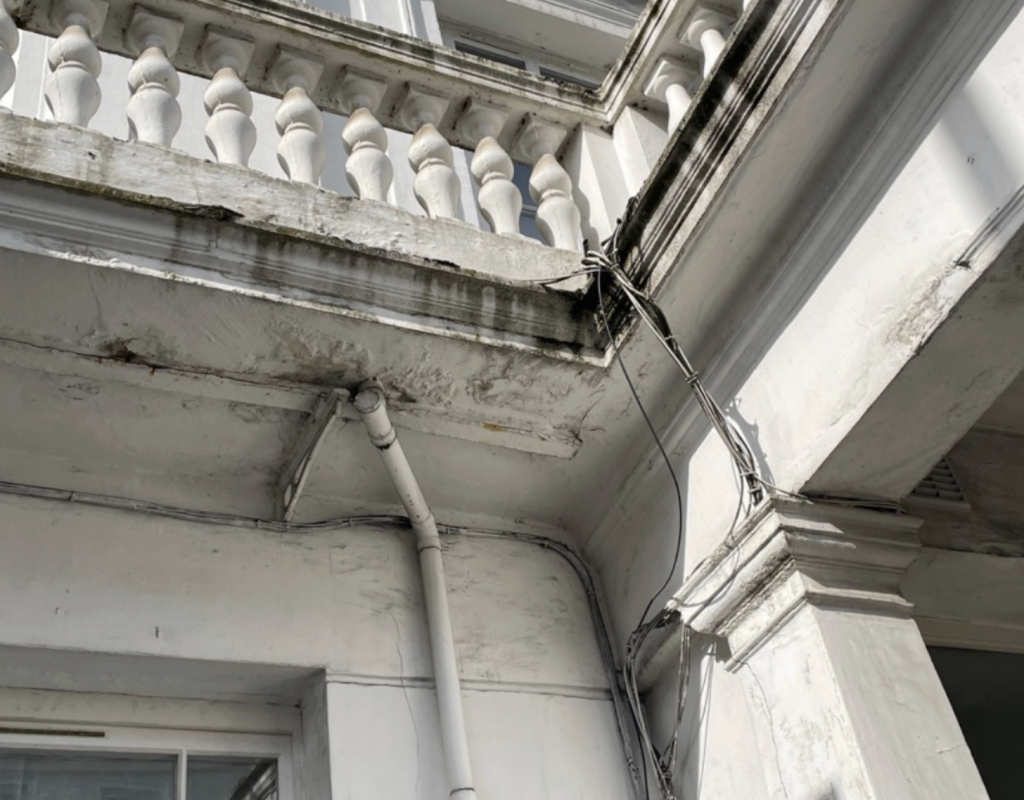
Render is commonly used on external walls to protect the building from the weather and improve the appearance of the property. It can be found on period homes, modern houses, extensions, boundary walls, and converted properties.
Over time, render can crack, loosen, stain, or break away. In some cases, the cracking may be minor and mainly cosmetic. In other cases, it may allow water to enter the wall and lead to damp, blown render, or further deterioration.
The key is understanding what has caused the cracking and whether it needs repair.
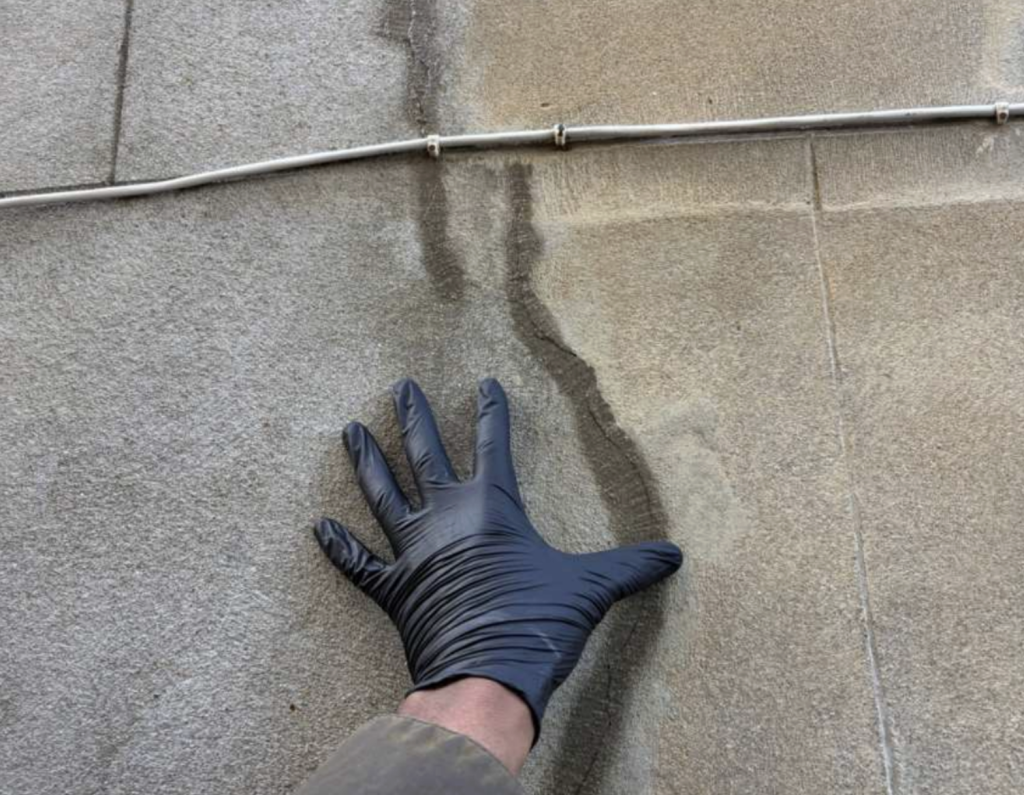
What causes cracks to render?
Render can crack for several reasons.
Common causes include:
- age-related wear;
- weather exposure;
- thermal movement;
- shrinkage as the render dries;
- poor application;
- impact damage;
- trapped moisture behind the render;
- movement in the wall beneath;
- defective gutters or downpipes;
- poor maintenance;
- previous unsuitable repairs.
Small hairline cracks are common and may not indicate a serious problem. However, wider cracks, repeated cracking, or cracks associated with damp staining should be assessed properly.
Why do cracks to render matter?
Render is designed to protect the wall behind it.
When cracks appear, rainwater can enter through the gaps. Over time, this can cause the render to loosen or become hollow. This is often described as “blown render”.
Once render becomes loose, it may crack further, detach from the wall, or fall away. Moisture can then reach the brickwork or blockwork behind, increasing the risk of damp and internal staining.
Cracks to render should therefore not be ignored, particularly where they are open, widespread, or located on exposed elevations.
What signs should you look out for?
Homeowners and buyers should look for:
- hairline cracking;
- wider cracks running vertically or horizontally;
- diagonal cracks around windows and doors;
- hollow-sounding render when tapped;
- bulging or loose render;
- missing sections of render;
- staining beneath cracks;
- algae or moss growth;
- damp patches internally;
- repeated patch repairs.
Cracks around windows, doors, bay windows, parapets, and extensions should be reviewed carefully, as these areas are more vulnerable to movement and water penetration.
Is cracked render always serious?
Not always.
Some cracking may be superficial and caused by normal drying, age, or minor surface movement. These cracks may be capable of local repair and redecoration.
However, cracks can sometimes indicate a more significant issue. If the crack is wide, continues through the wall behind, keeps reopening after repair, or is associated with movement, further investigation may be needed.
It is important not to assume that all render cracking is cosmetic.
Can cracked render cause damp?
Yes.
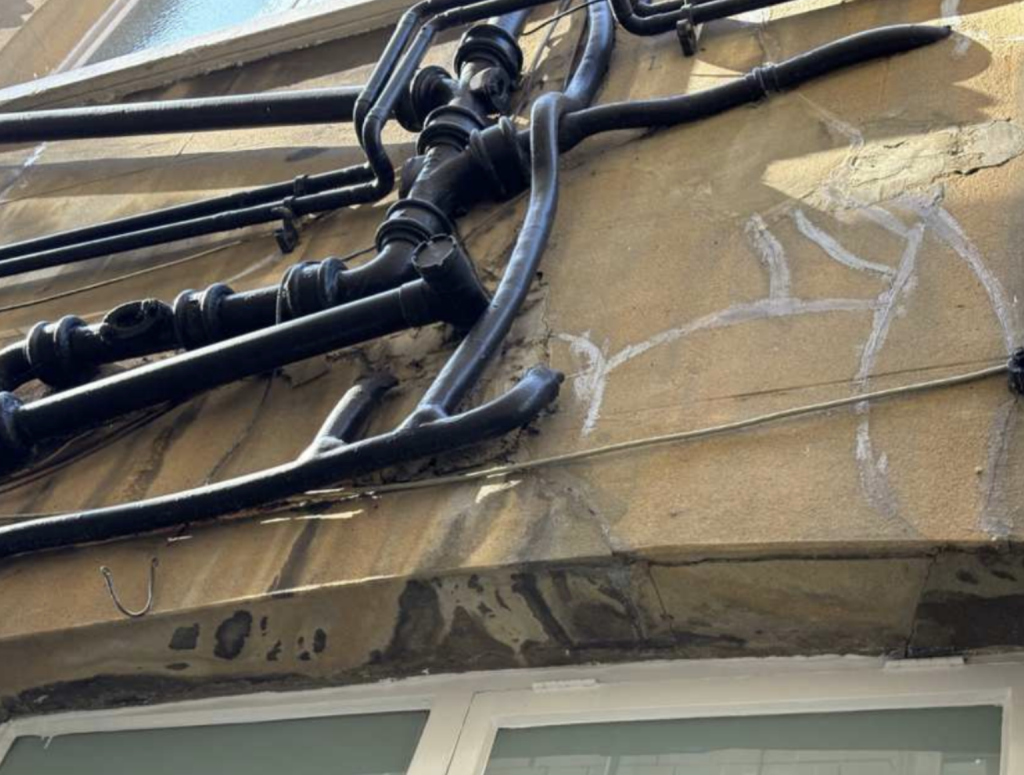
Cracks can allow rainwater to pass through the render and into the wall behind. This is more likely where the property is exposed to driving rain, where gutters are leaking, or where render has already become loose.
If moisture becomes trapped behind the render, it can lead to damp staining, damaged plaster, peeling paint, mould growth, or deterioration of the wall fabric.
Repairing the crack alone may not solve the issue if water is still entering from another source, such as a defective gutter, downpipe, roof detail, or window seal.
How are cracks to render repaired?
The right repair depends on the cause, width, and extent of the cracking.
Minor cracks may be filled with a suitable exterior filler before redecoration. Larger cracks may need to be opened up, repaired properly, and finished to match the surrounding render.
Where render has blown or become loose, local patch repair may be required. This usually involves removing the defective render, preparing the wall behind, applying new render, and redecorating once dry.
If the cracking is widespread, or if the render is failing across large areas, a full render renewal may be more appropriate than repeated patch repairs.
Why matching the existing render matters
Render repairs should be carried out carefully.
The new render should be suitable for the age, construction, and condition of the property. It should also be finished to match the existing texture and appearance as closely as possible.
Poorly matched patch repairs can stand out visually. More importantly, using the wrong material can trap moisture or cause further cracking.
Older properties may need a more breathable render system, whereas modern properties may use different materials. The correct specification is important.
Should buyers be concerned?
Cracks to render should not automatically put you off buying a property.
In many cases, they are a manageable maintenance issue. However, buyers should understand whether the cracking is minor, whether water is getting behind the render, and whether there are any signs of movement or damp.
If cracking is extensive, high-level, or affecting areas that are difficult to access, repair costs may be higher.
A survey can help identify whether the issue is likely to be cosmetic, maintenance-related, or something that requires further investigation.
Stokemont’s advice
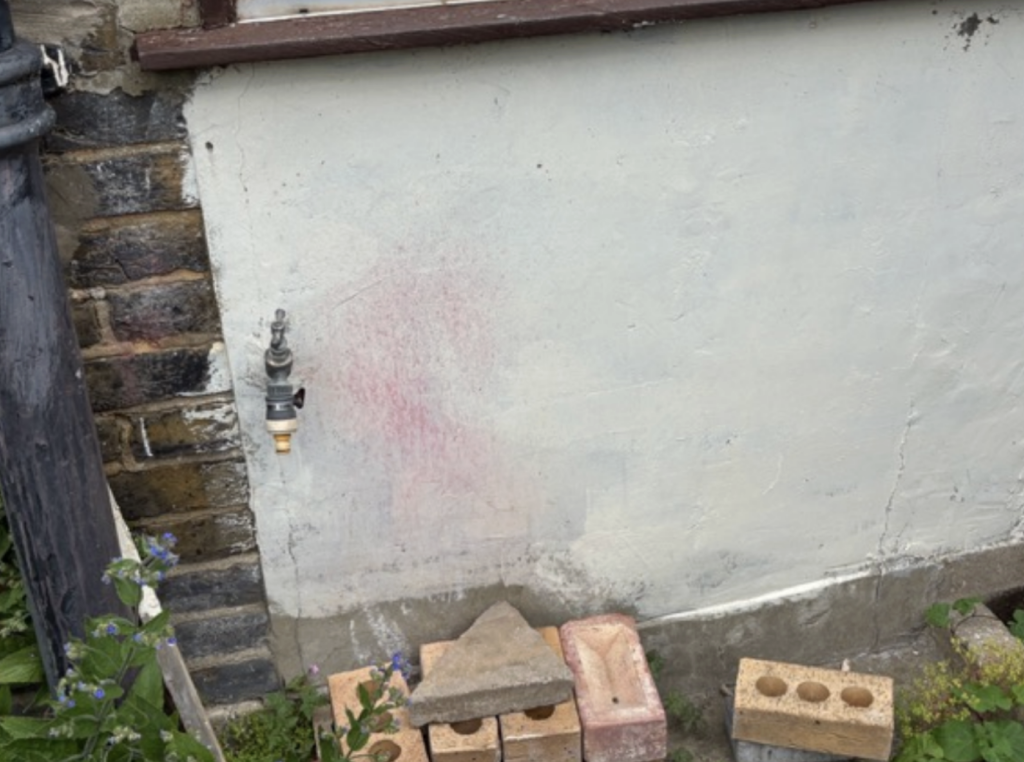
If you notice cracks to render, it is best to deal with them before water begins to cause further damage.
Early repair can help protect the wall, reduce the risk of damp, and prevent more costly works later. The most important step is understanding why the render has cracked and whether the wall behind remains sound.
At Stokemont, we explain property defects clearly and practically, so you understand what is happening, what it may mean, and what action may be needed.
Concerned about cracks to render?
If you are buying a property, selling a property, or concerned about cracking to external render, Stokemont can help.
Contact Stokemont today to arrange a property survey or defect inspection and receive clear, professional advice before minor issues become more costly to resolve.