This article is part of our typical property defects series and based upon issues our surveyors regularly locate during RICS Level 2 Surveys, Level 3 Surveys and Defect Analysis Reports.
Carpet moths are a common but frustrating problem in homes. They can damage carpets, rugs, soft furnishings and other natural fibres, often before you realise they are there.
The issue is not usually caused by the adult moths themselves, but by their larvae. These larvae feed on natural fibres such as wool, silk, fur, feathers and other animal-based materials. If left untreated, they can cause visible patches of damage and may spread to other areas of the property.
What are carpet moths?
Carpet moths are small insects that are often found in quiet, dark and undisturbed areas of a home.
They are commonly found:
- under beds;
- beneath sofas;
- behind furniture;
- around skirting boards;
- under rugs;
- in cupboards;
- in rarely used rooms;
- along carpet edges.
Because they prefer hidden areas, the damage may not be noticed until furniture is moved or a carpet is lifted.
What are the signs of carpet moths?
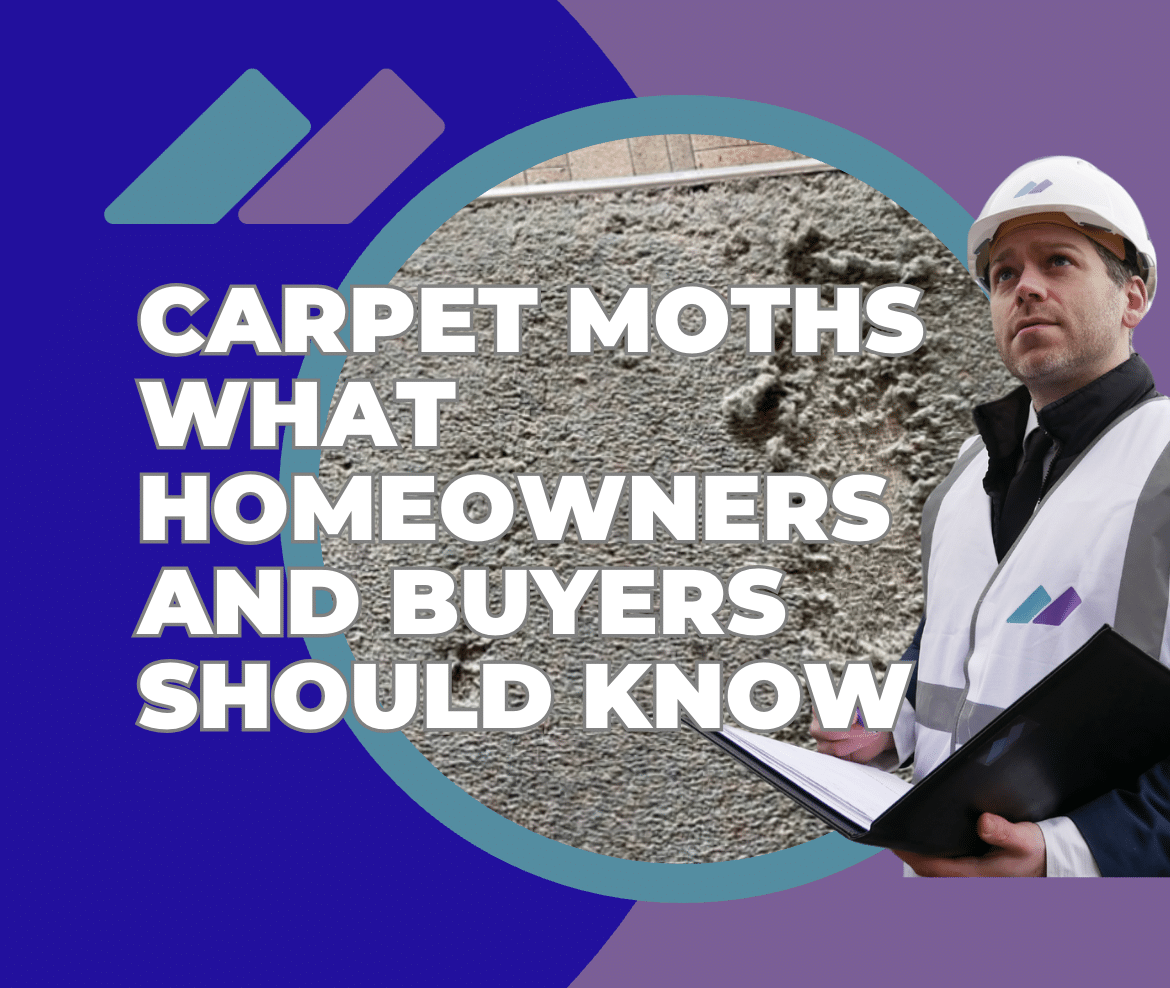
The most obvious sign is damage to the carpet. This may appear as bald patches, thinning, fraying or areas where the carpet pile has been eaten away.
Other signs can include:
- small moths flying close to the floor;
- larvae in carpet edges or dark corners;
- fine webbing or debris;
- loose carpet fibres;
- damage under furniture;
- recurring bald patches after cleaning.
Carpet moths are often mistaken for general wear and tear at first. However, if damage appears in areas with little foot traffic, particularly around the edges of a room or beneath furniture, moth activity may be the cause.
Why do carpet moths appear?
Carpet moths are attracted to natural fibres and areas that are quiet, dark and undisturbed.
They are more likely to appear where carpets contain wool or other natural materials. They can also be encouraged by dust, hair, pet fur, food debris and poor cleaning access beneath furniture.
Homes with fitted wool carpets, heavy rugs, stored textiles or rooms that are not regularly used may be more vulnerable.
Are carpet moths serious?
Carpet moths can become expensive to deal with if left untreated.
A small, localised problem may be manageable if caught early. However, once an infestation is established, it can be difficult to remove completely. The larvae may be hidden beneath furniture, around the carpet perimeter, under the underlay or in nearby soft furnishings.
In severe cases, the affected carpet may need professional treatment or replacement.
This was illustrated in the case of Iya Patarkatsishvili and Yevhen Hunyak v William Woodward-Fisher [2025].
In this case, a couple who bought a £32.5 million mansion in Ladbroke Grove, west London, won a High Court case allowing them to hand the property back and recover most of their money after discovering a severe moth infestation.
Iya Patarkatsishvili and Yevhen Hunyak sued the seller, William Woodward-Fisher, arguing that he had failed to disclose the problem during pre-contract enquiries. The court heard that moths were found in places including wine glasses, toothbrushes and clothing, and that some clothes had been ruined.
The judge found that Woodward-Fisher had made fraudulent misrepresentations, as pest-control reports before the sale had already identified a serious infestation in the property’s insulation. The couple were awarded a repayment, reduced to reflect the time they had lived there, along with substantial damages including stamp duty, eradication costs and £15,000 for damaged clothes.
Source BBC
Can carpet moths damage more than carpets?
Yes. Carpet moths can affect other natural materials in the home.
This can include:
- wool rugs;
- upholstered furniture;
- curtains;
- clothing;
- blankets;
- cushions;
- stored fabrics;
- natural-fibre insulation or padding.
This is why it is important to treat the wider area and not just the visible carpet damage.
How can carpet moths be treated?
The right treatment depends on the extent of the infestation.
For minor cases, thorough cleaning may help. This should include vacuuming carpet edges, beneath furniture, under rugs and along skirting boards. Particular care should be taken in dark, undisturbed areas.
For more significant infestations, professional pest treatment is usually advisable. Over-the-counter sprays and traps may help identify or reduce activity, but they may not fully resolve the issue if larvae are hidden beneath carpets or furniture.
Where carpets are badly damaged, treatment alone may not be enough. Replacement may be required, particularly where bald patches are extensive or the carpet has been weakened.
Should buyers be concerned?
Carpet moths should not automatically put you off buying a property, but they should not be ignored.
If carpet moth damage is visible during a viewing or survey, it is sensible to consider the likely cost of treatment, cleaning and possible carpet replacement.
Buyers should also consider whether the issue may extend beyond the visible room. If one carpet has been affected, nearby rooms, rugs, cupboards and soft furnishings may also need checking.
Can carpet moths be prevented?
There are several steps that can help reduce the risk of carpet moths returning:
- vacuum regularly, especially around edges and under furniture;
- move furniture periodically to clean hidden areas;
- clean beneath beds and sofas;
- avoid leaving natural-fibre textiles undisturbed for long periods;
- store wool clothing and fabrics securely;
- deal with infestations early;
- consider professional treatment where activity continues.
Regular cleaning and early action are key. Carpet moths are much easier to manage before they become established.
Stokemont’s advice
If you notice bald patches, thinning carpet or moth activity, it is best to act early.
Carpet moths can be difficult to remove once they spread, and visible damage may only be part of the problem. A professional inspection can help you understand whether the issue is localised or more widespread.
At Stokemont, we explain property defects clearly and practically, so you understand what is happening, what it may mean and what action may be needed.
Concerned about carpet moths?
If you are buying a property, selling a property or concerned about damage to carpets or soft finishes, Stokemont can help.
Contact Stokemont today to arrange a property survey or defect inspection and receive clear, professional advice before minor issues become more costly to resolve.