
This article is part of our typical property defects series and based upon issues our surveyors regularly locate during RICS Level 2 Surveys, Level 3 Surveys and Defect Analysis Reports.
A damp-proof course, often referred to as a DPC, is designed to help prevent moisture from the ground rising into the walls of a property.
When a DPC is working properly, it forms a barrier between the lower part of the wall and the structure above. However, if something allows moisture to pass around or over that barrier, this is known as bridging of the DPC.
DPC bridging is a common issue and can lead to dampness at low level if left unresolved.
What is a DPC?
A damp-proof course is a protective barrier built into the wall, usually close to ground level.
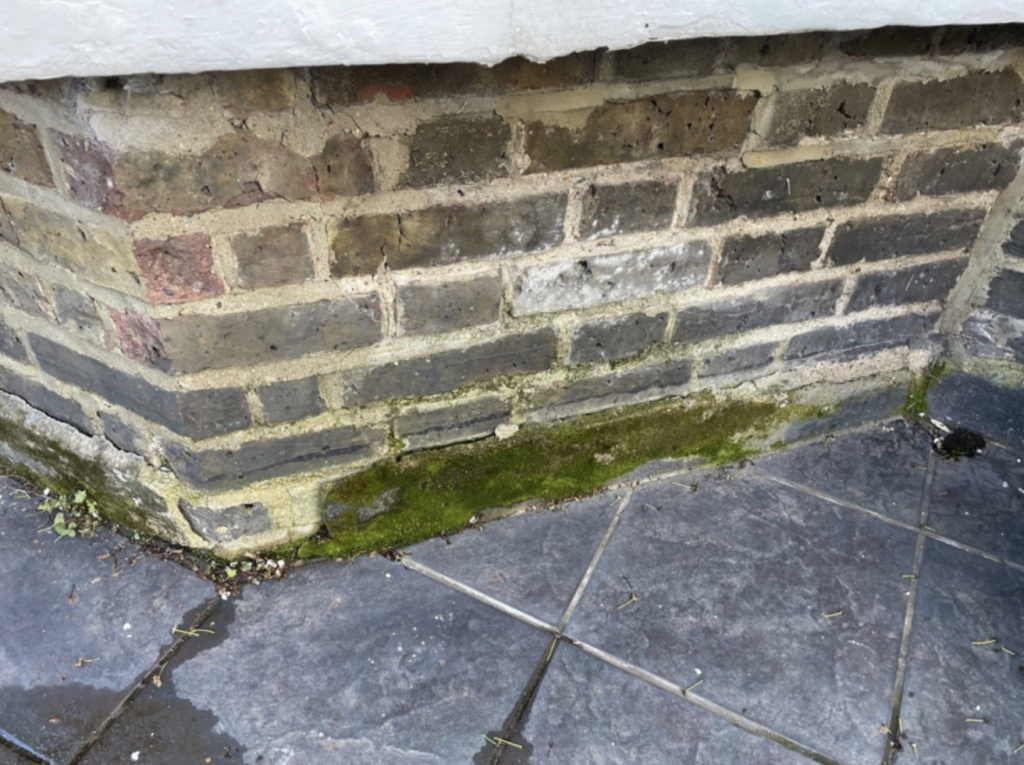
Its purpose is to reduce the risk of ground moisture rising through the wall. In many properties, the DPC can be seen externally as a thin horizontal line in the brickwork, usually around 150mm above external ground level.
Older properties may have different types of damp protection, and some may not have a modern DPC at all.
What does bridging of the DPC mean?
Bridging occurs when the DPC is bypassed.
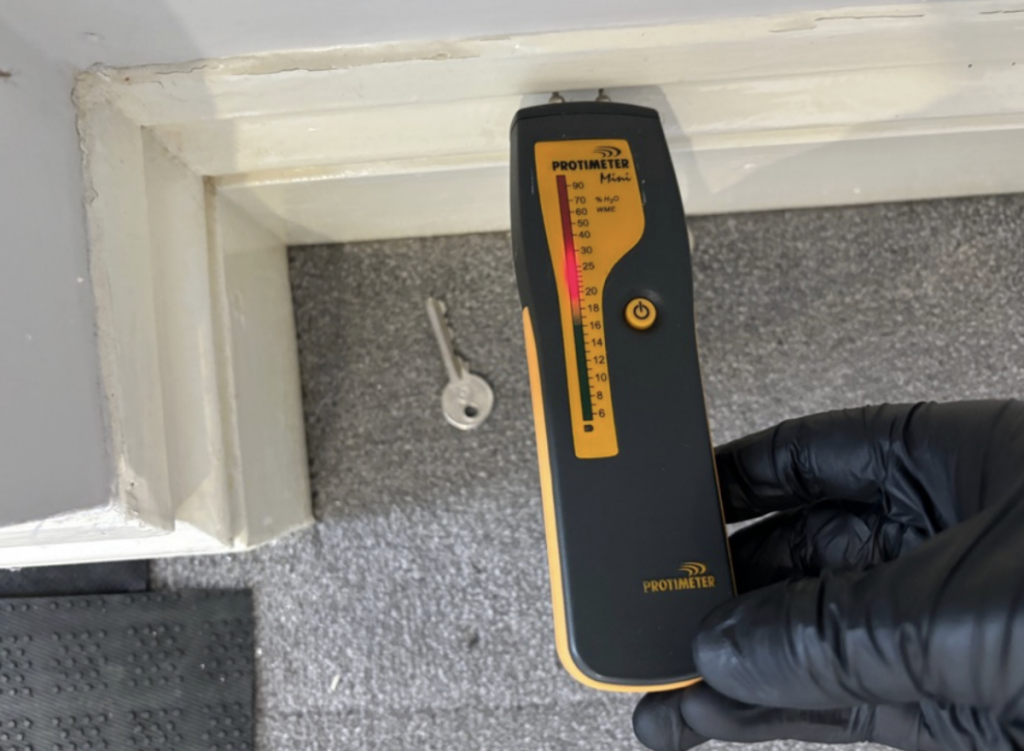
This means moisture can travel around the damp-proof course and enter the wall above it. When this happens, damp may appear internally, often at low level.
Bridging does not necessarily mean the DPC itself has failed. In many cases, the problem is that something has been added or built up around it.
What causes DPC bridging?
Common causes include:
- external ground levels being too high;
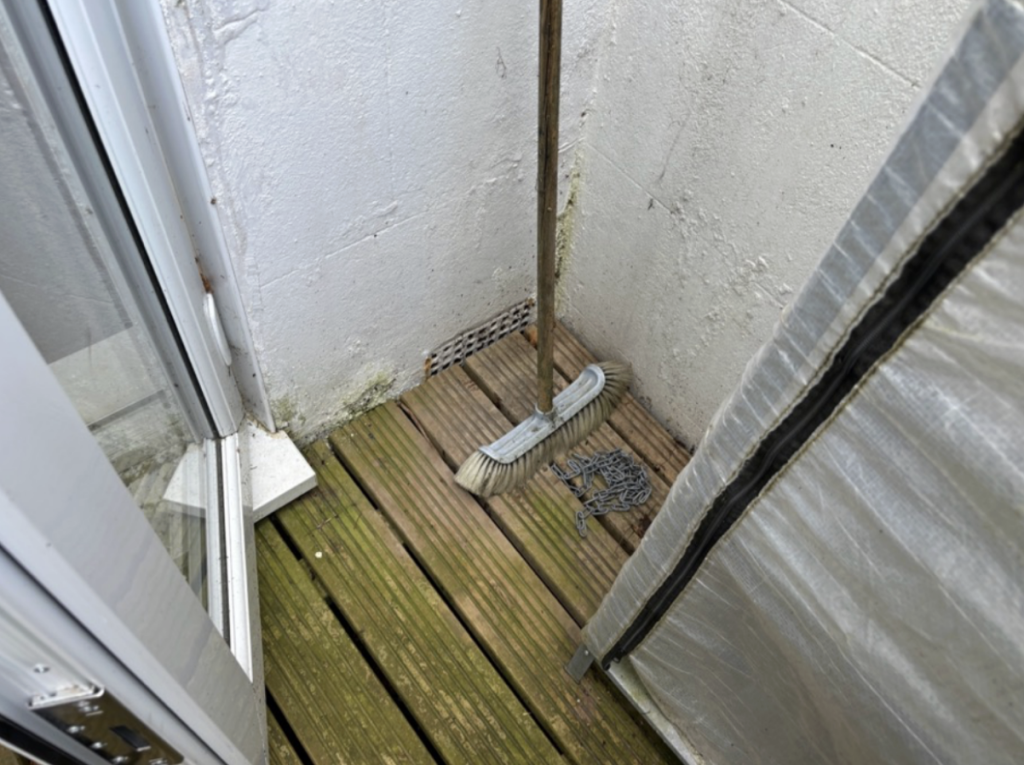
- patios, driveways, or decking built above the DPC;
- flower beds or soil against the wall;
- render running down past the DPC;
- external insulation or finishes covering the DPC;
- debris in the cavity wall;
- internal floor levels being raised;
- plaster extending below the DPC;
- blocked air bricks;
- poor drainage around the property.
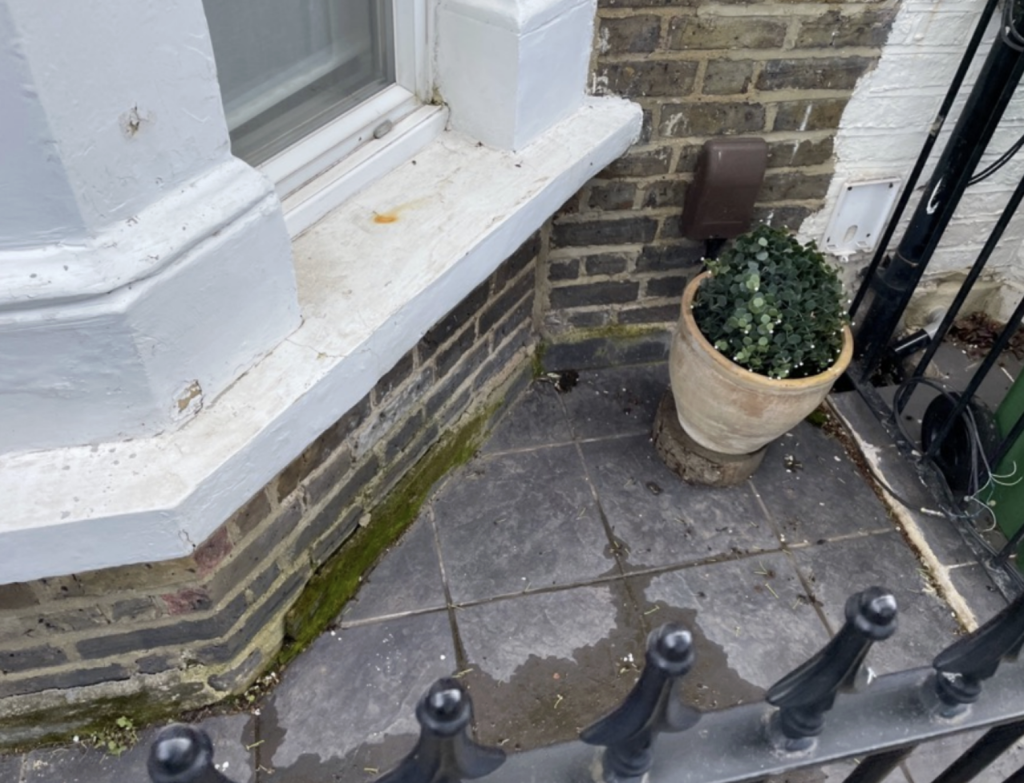
One of the most common examples is where paving or decking has been installed too high against the external wall. This can allow rainwater to splash or sit above the DPC level, increasing the risk of damp inside.
What signs should you look out for?
Signs of possible DPC bridging can include:
- damp patches at low level;
- peeling paint or wallpaper near the floor;
- salt deposits on internal walls;
- damaged skirting boards;
- musty smells;
- mould growth at low level;
- damp plaster;
- high external ground levels;
- air bricks partly or fully covered;
- decking or paving tight against the wall.
These signs do not always mean there is rising damp. They may be caused by condensation, leaks, poor ventilation, defective gutters, or other forms of moisture ingress.
The important thing is to identify the cause before carrying out remedial works.
Why does DPC bridging matter?
If the DPC is bridged, moisture can enter the wall and affect internal finishes.
Over time, this can lead to damaged plaster, stained decorations, decayed skirting boards, mould growth, and unpleasant living conditions.
If the issue is left unresolved, internal repairs may fail because the moisture source remains. This is why simply redecorating over damp staining is unlikely to provide a long-term solution.
Can DPC bridging be fixed?
Yes. In many cases, DPC bridging can be resolved by removing the cause of the bridge.
This may include:
- lowering external ground levels;
- cutting back paving or decking;
- improving drainage;
- removing soil or flower beds from against the wall;
- stopping render above the DPC;
- clearing blocked air bricks;
- removing debris from cavities;
- adjusting internal plaster or finishes;
- improving ventilation below suspended timber floors.
The correct repair will depend on how the DPC is being bridged and whether moisture has already caused internal damage.
Is a new DPC always needed?
Not always.
Where damp is caused by bridging, installing a new damp-proof course may not be the right first step. If the existing DPC is being bypassed, the priority is usually to remove the bridge.
For example, if external paving has been installed too high, injecting a new DPC may not solve the problem if the paving continues to direct moisture into the wall.
A proper inspection can help establish whether the issue is a bridged DPC, a failed DPC, penetrating damp, condensation, or another defect.
Should buyers be concerned?
DPC bridging should not automatically put you off buying a property.
In many cases, it is a manageable maintenance issue. However, buyers should understand the extent of the damp, the likely cause, and the cost of putting it right.
If high ground levels, decking, or paving are present around the property, it is sensible to consider whether they may be contributing to dampness. If internal damp damage is visible, further investigation may be needed before exchange of contracts.
A survey can help identify whether the issue is minor, localised, or part of a wider damp problem.
Stokemont’s advice
If you notice damp at low level, do not assume the DPC has failed.
The cause may be something more straightforward, such as high external ground levels, blocked air bricks, or paving that has been installed too close to the wall.
The key is to identify the source of moisture before spending money on repairs. Addressing the cause early can help prevent further damp damage and avoid unnecessary remedial works.
At Stokemont, we explain property defects clearly and practically, so you understand what is happening, what it may mean, and what action may be needed.
Concerned about DPC bridging?
If you are buying a property, selling a property, or concerned about damp at low level, Stokemont can help.
Contact Stokemont today to arrange a property survey or defect inspection and receive clear, professional advice before minor issues become more costly to resolve.