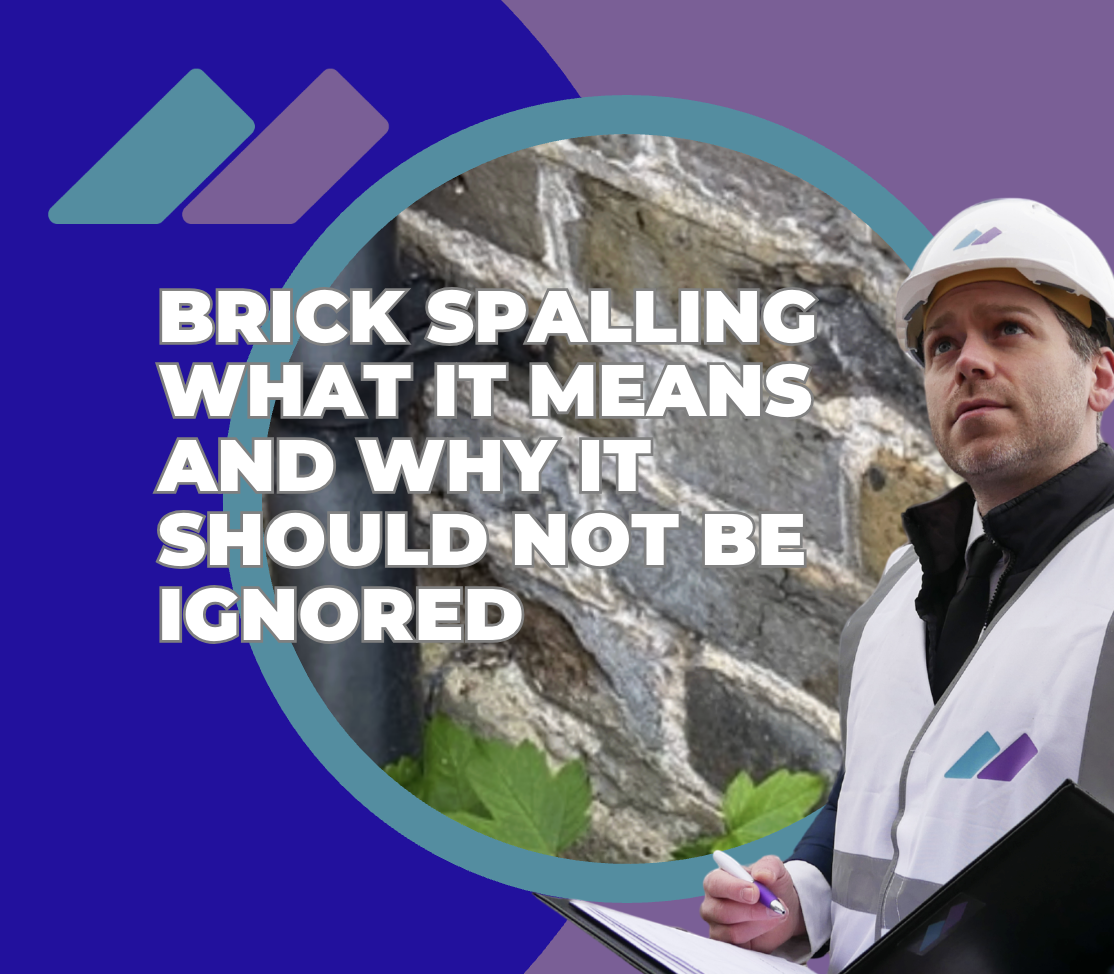
This article is part of our typical property defects series and based upon issues our surveyors regularly locate during RICS Level 2 Surveys, Level 3 Surveys and Defect Analysis Reports.
Brickwork is one of the most important parts of a property’s external fabric. It protects the building from the weather, supports the structure, and contributes to the overall appearance and value of the home.
One defect commonly identified during property surveys is brick spalling.
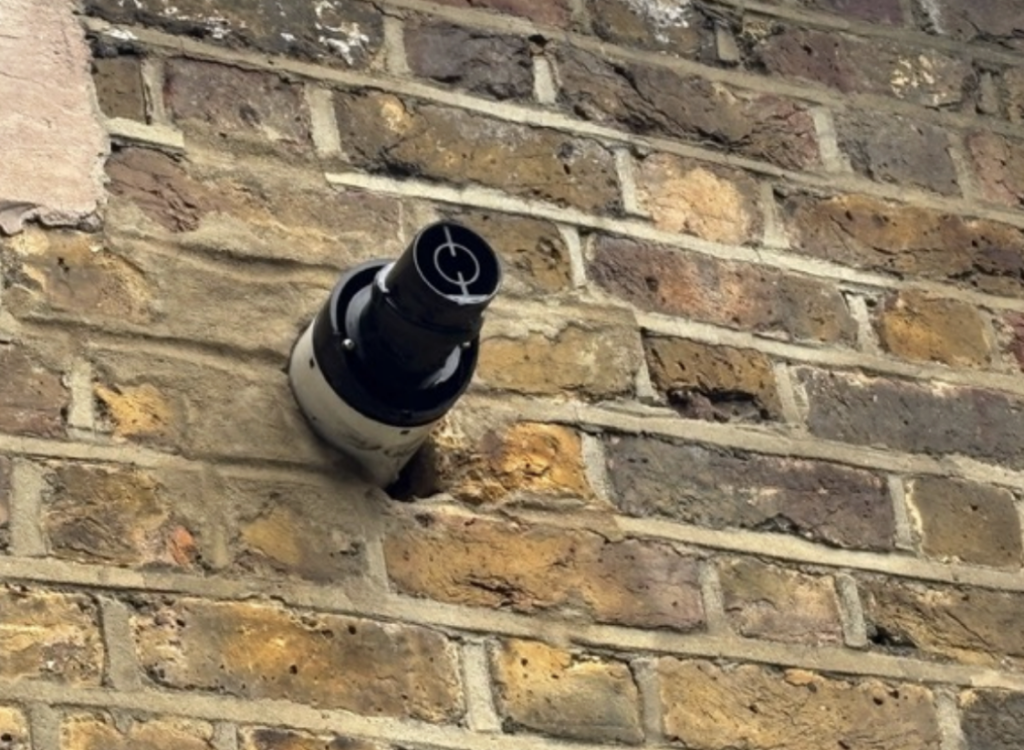
Spalling occurs when the face of the brick begins to break away, flake, crumble, or deteriorate. This can leave the brick looking rough, uneven, hollowed, or damaged. In some cases, only the outer face is affected. In more advanced cases, the brick can lose a significant amount of material.
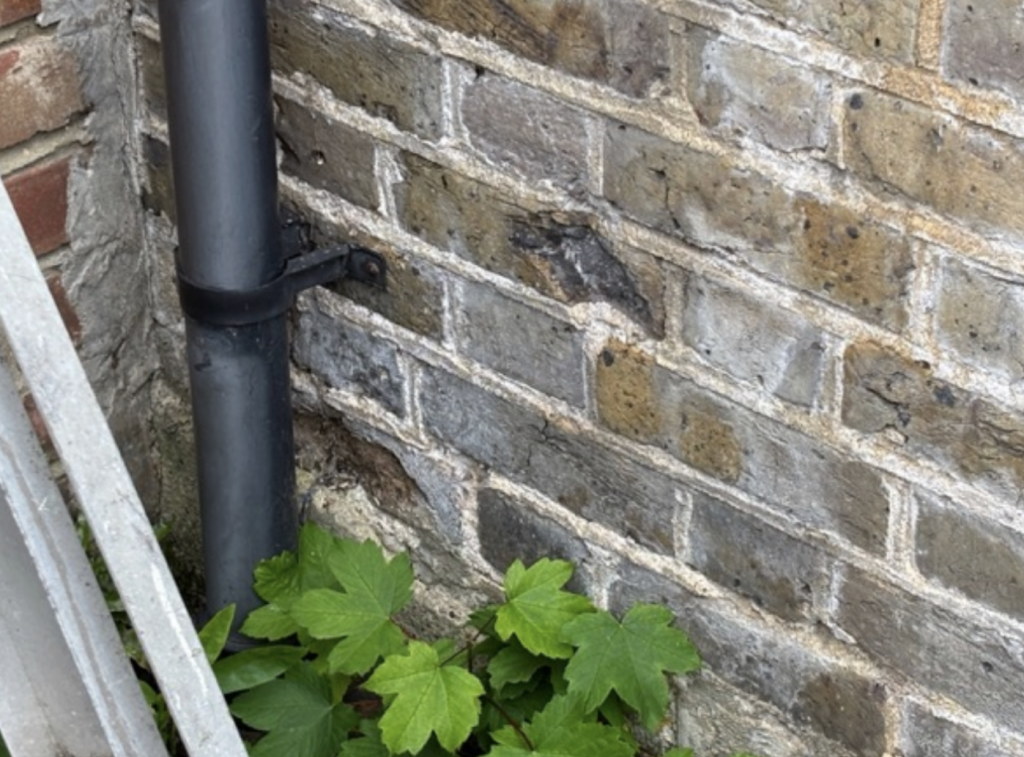
Although spalling may appear to be a cosmetic issue at first, it can be a sign that moisture is affecting the brickwork. If left untreated, it can lead to further deterioration and more costly repairs.
What causes brick spalling?
The most common cause of brick spalling is moisture.
Bricks are porous, which means they can absorb water. When water enters the brick and temperatures drop, the trapped moisture can freeze and expand. This freeze-thaw action places pressure on the brick face, eventually causing it to crack, flake, or break away.
Common causes include:
- long-term weather exposure;
- defective or blocked gutters;
- leaking downpipes;
- poor external drainage;
- cement-based pointing trapping moisture;
- painted brickwork preventing breathability;
- frost damage;
- previous unsuitable repairs;
- general age-related deterioration.
Older properties are often more vulnerable, particularly where the brickwork has been altered with hard cement mortar or non-breathable paint finishes. These materials can trap moisture within the wall, increasing the risk of damage.
Why does brick spalling matter?
Spalled brickwork should not be ignored because the brick face forms part of the protective external skin of the building.
Once the surface of the brick has failed, the brick becomes more exposed to rainwater, frost, and further erosion. Over time, this can lead to deeper deterioration, defective pointing, damp penetration, and damage to neighbouring bricks.
Where spalling is widespread, it can affect the appearance of the property and may point towards wider maintenance issues. For example, spalling may be linked to defective rainwater goods, poor drainage, or inappropriate previous repairs.
In more severe cases, deteriorated brickwork can become loose or unstable, especially around chimney stacks, parapets, boundary walls, and exposed elevations.
How is brick spalling identified?
During a survey, a surveyor will inspect the external walls from ground level and other safe vantage points where possible. The surveyor will look for areas where the brick faces have broken away, become soft, crumbled, cracked, or heavily weathered.
The inspection should also consider the condition of the mortar joints. Spalling is often found alongside eroded or defective pointing. Where pointing has failed, more water can enter the wall, accelerating deterioration.
A surveyor will also look for contributing factors such as leaking gutters, defective downpipes, high external ground levels, staining, vegetation, painted masonry, or previous patch repairs.
This is important because simply replacing the damaged bricks may not solve the problem if the cause of the moisture remains.
Can spalled bricks be repaired?
In most cases, severely spalled bricks need to be removed and replaced.
Where the rear face of the brick remains sound and suitable, it may sometimes be possible for a contractor to carefully cut out the brick, rotate it, and reinstate it. However, where the brick is too damaged, it should be cut out and replaced with a suitable matching brick.
Any weathered or defective mortar joints should also be repointed and missing pointing can be rectified by cutting or raking out the blown or missing pointing, wire brushing the exposed surface, and refilling with a neat bead of mortar.
For many older properties, a lime mortar mix may be more appropriate than a hard cement mortar. Lime mortar is more flexible and breathable, helping the wall manage moisture more effectively.
Why matching materials matters
Brick replacement should not be treated as a basic patch repair. The replacement bricks should be carefully selected to match the existing property as closely as possible in size, colour, texture, and durability.
The pointing should also match the existing style and finish. Poorly matched repairs can stand out visually and may affect the character of the property.
More importantly, unsuitable materials can make the problem worse. Hard cement pointing, for example, can trap moisture in softer older bricks, increasing the risk of future spalling.
Should buyers be concerned?
Brick spalling should not automatically deter a buyer from purchasing a property. In many cases, it is a manageable maintenance issue.
However, buyers should understand the extent of the defect before proceeding. A few isolated spalled bricks may be relatively straightforward to repair. Widespread spalling, especially where linked to dampness, defective gutters, or poor previous repairs, may require more extensive works.
A survey can help identify whether the issue is isolated, moderate, or part of a wider pattern of external deterioration.
Stokemont’s advice
If brick spalling is identified, the first step is to understand why it has occurred.
Replacing damaged bricks is important, but it is equally important to address the source of moisture. This may include repairing gutters, clearing blockages, improving drainage, removing unsuitable coatings, or repointing defective mortar joints.
Early action can help prevent further deterioration and reduce the likelihood of more expensive repairs later.
Concerned about brick spalling at your property?
If you are buying a property, selling a property, or concerned about damaged brickwork, Stokemont can help.
Our surveyors provide clear, practical advice so you understand the condition of the property, the likely cause of the defect, and the next steps available to you.
Contact Stokemont today to arrange a property survey or defect inspection and receive clear, professional advice before minor issues become more costly to resolve.