
This article is part of our typical property defects series and based upon issues our surveyors regularly locate during RICS Level 2 Surveys, Level 3 Surveys and Defect Analysis Reports.
Bay windows are a common and attractive feature in many homes, particularly older and period properties. They add character, light, and additional internal space.
However, bay windows can also be more vulnerable to movement than other parts of a property. This is because they are often built differently from the main structure of the house and, in some cases, may have shallower foundations.
Movement to a bay window should not automatically cause alarm, but it should be properly assessed.
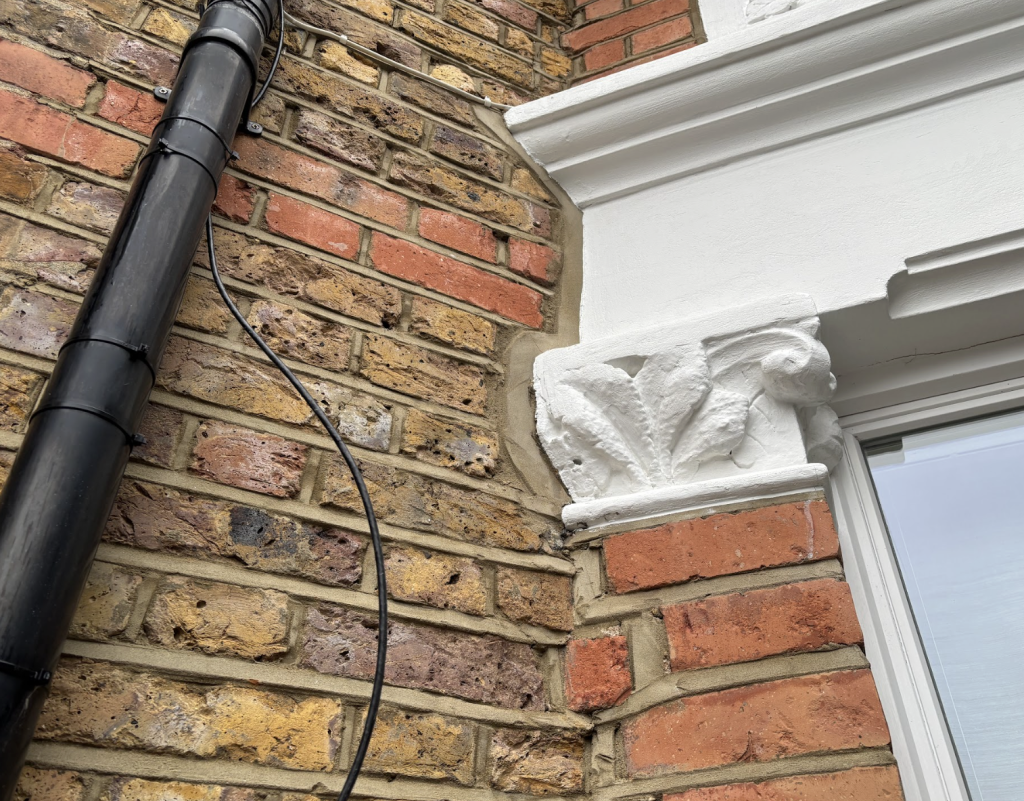
What is bay window movement?
Bay window movement occurs when the bay begins to move differently from the main part of the property.
This is often referred to as differential movement. In simple terms, the bay and the main house are not moving in exactly the same way.
This can lead to cracking, gaps, distortion, or separation where the bay meets the rest of the building.
Why do bay windows move?
Bay windows can move for several reasons.
Common causes include:
- shallow or inadequate foundations;
- older construction methods;
- natural ground movement;
- clay soil shrinking or expanding;
- nearby trees drawing moisture from the ground;
- leaking drains or poor drainage;
- defective gutters or rainwater goods;
- historic settlement;
- poor previous repairs;
- lintel or structural support issues.
In many older homes, bay windows were not always constructed with the same level of foundation support as the main property. This can make them more susceptible to movement over time.
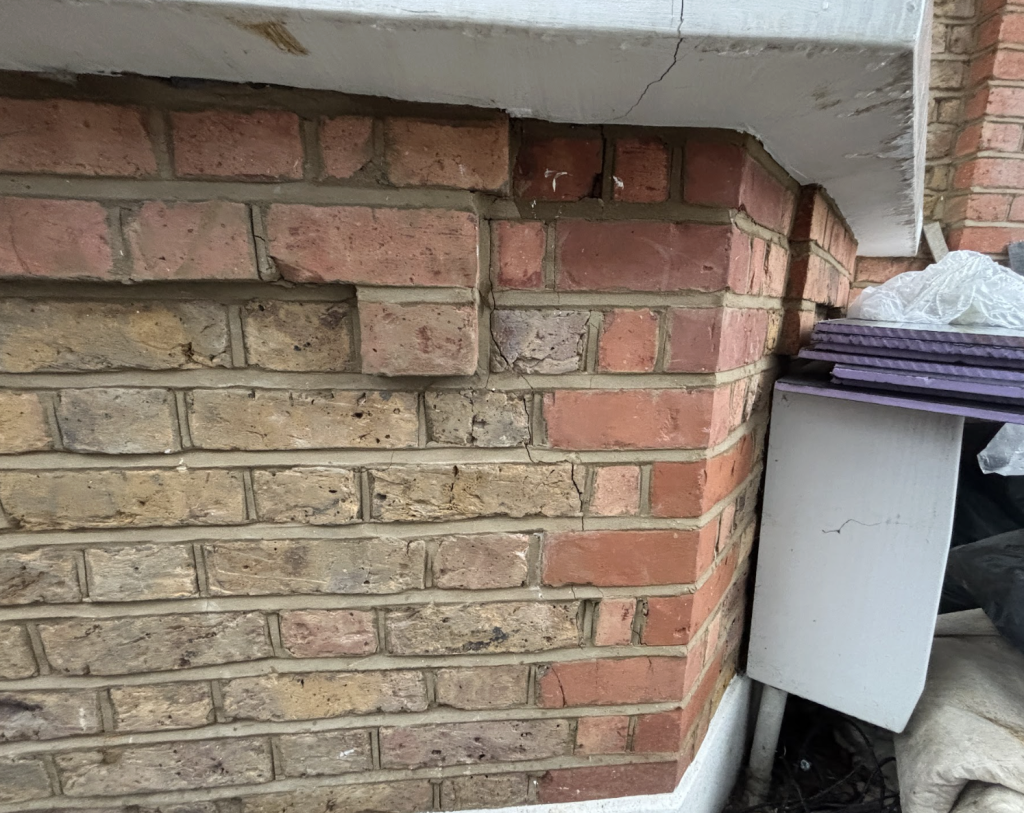
What signs should you look out for?
Bay window movement can appear internally, externally, or both.
Signs to look out for include:
- cracking around the bay window;
- cracks where the bay joins the main wall;
- stepped cracking in brickwork;
- gaps around window frames;
- sloping or uneven window sills;
- cracks to plaster around the bay;
- windows becoming stiff or difficult to open;
- separation around skirting boards;
- evidence of repeated filling or patch repairs;
- damp staining around cracks or open joints.
One small crack does not always mean there is a serious problem. However, wider cracking, repeated cracking, or movement affecting both the inside and outside of the bay should be professionally reviewed.
Should bay window movement be taken seriously?
Yes, but it should be assessed in context.
Bay window movement is a common defect, especially in older properties. In some cases, the movement may be historic and no longer progressing. In other cases, it may be ongoing and require further investigation.
The concern is whether the bay is continuing to move, whether water can enter through open cracks, and whether the movement is affecting the surrounding structure.
If cracks are left open, rainwater can penetrate the wall, which may lead to damp, deterioration of brickwork, damaged plaster, and further repair costs.
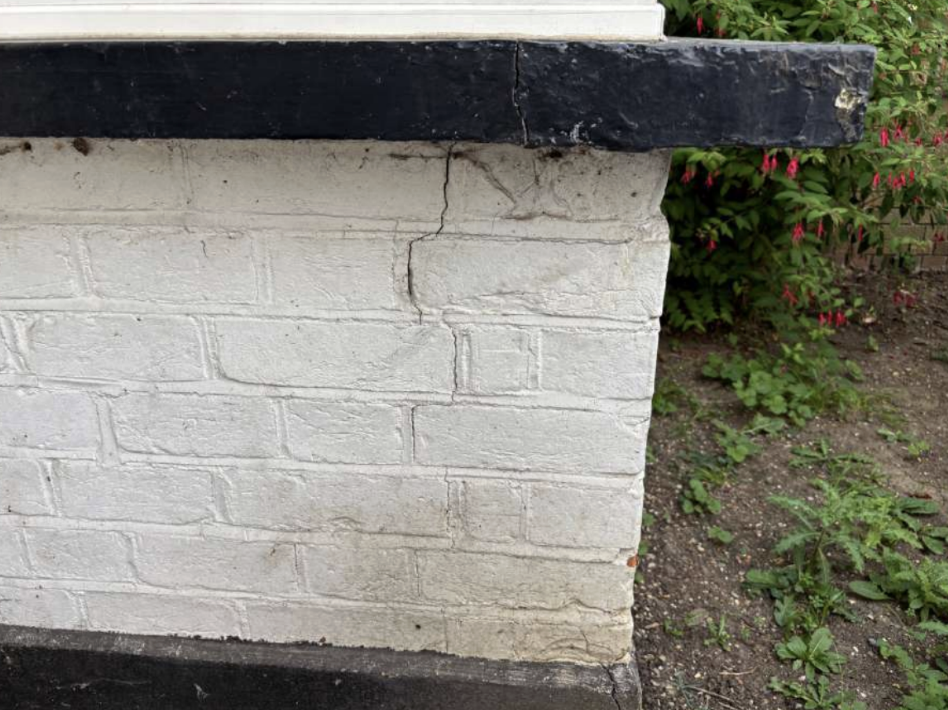
Can bay window movement affect the windows?
Yes.
Movement can distort the shape of the bay, which may affect the window frames. This can cause windows to stick, bind, become difficult to open, or fail to close properly.
In more serious cases, movement can place pressure on glazing, frames, sills, and surrounding brickwork.
If the windows are not operating correctly, this should be considered alongside any cracking or movement to the bay itself.
How is bay window movement repaired?
The right repair depends on the cause and severity of the movement.
For minor or historic movement, repairs may involve filling cracks, repointing open joints, making good internal finishes, and monitoring the area over time.
Where movement is more significant, further investigation may be needed. This could include structural engineer advice, drainage checks, trial holes, or monitoring to establish whether the movement is ongoing.
More substantial repairs may include:
- crack stitching;
- helical bar reinforcement;
- localised rebuilding;
- strengthening works;
- improved drainage;
- foundation repairs;
- underpinning in more serious cases.
The key is to understand the cause before carrying out repairs. Simply filling cracks without addressing the underlying issue may only provide a temporary solution.
Should buyers be concerned?
Bay window movement should not automatically put you off buying a property.
However, it is something that should be understood before you proceed. A survey can help identify whether the issue appears minor, historic, or potentially more serious.
If movement is visible, buyers should consider whether further investigation is required, whether the cost of repairs should be reflected in the purchase price, and whether any previous repairs or insurance claims have been made.
It is always better to understand the issue before exchange of contracts rather than discover the cost after completion.
Stokemont’s advice
If you notice cracking, gaps, or movement around a bay window, it is best to seek advice early.
Bay window movement can be minor and manageable, but it can also indicate a wider issue with foundations, drainage, ground movement, or structural support.
At Stokemont, we explain property defects clearly and practically, so you understand what is happening, what it may mean, and what action may be needed.
Concerned about bay window movement?
If you are buying a property, selling a property, or concerned about cracking around a bay window, Stokemont can help.
Contact Stokemont today to arrange a property survey or defect inspection and receive clear, professional advice before minor issues become more costly to resolve.