
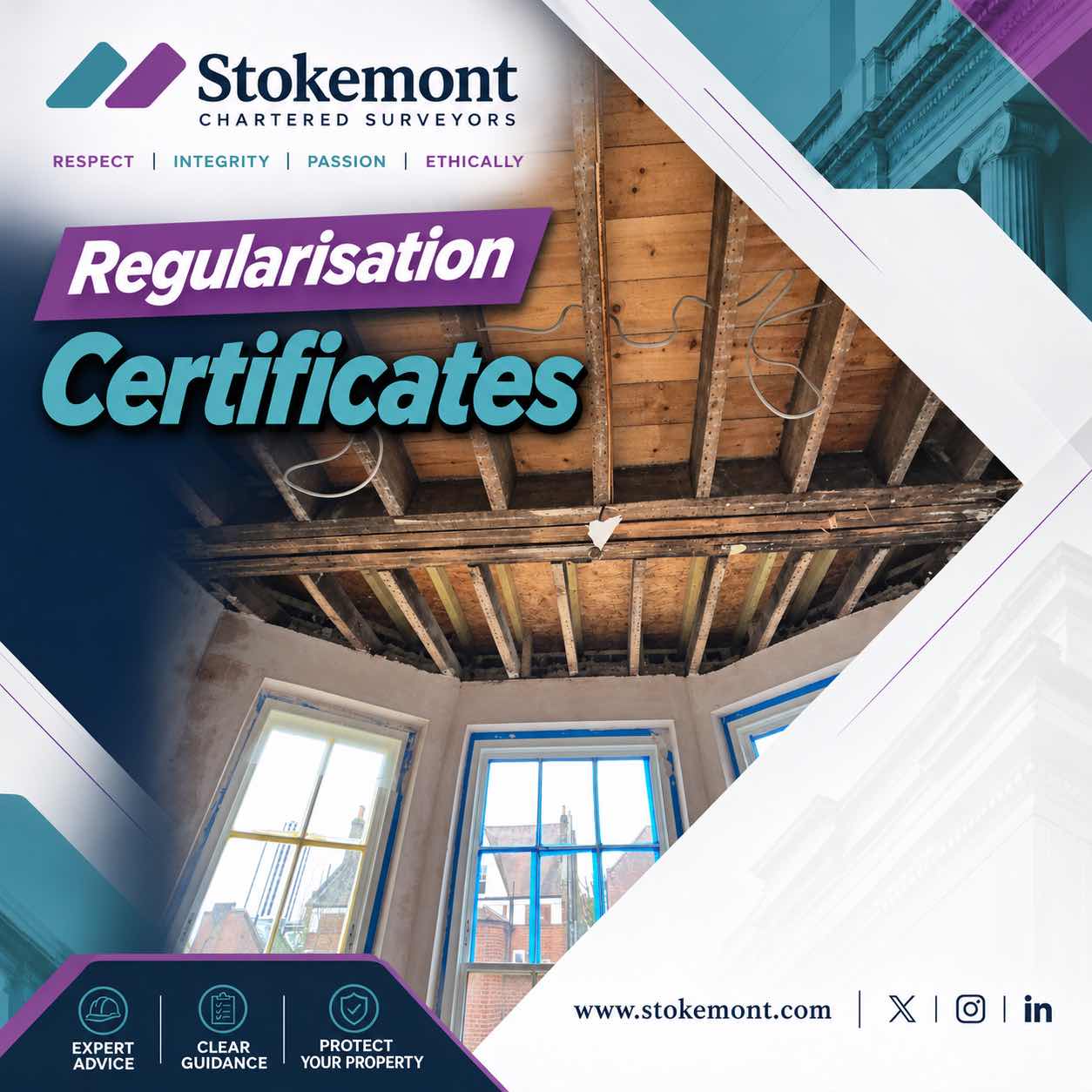
Historic alterations can become a significant obstacle when selling a leasehold property, particularly where the necessary landlord consent or building regulations documentation is missing. The works may have been carried out by the current leaseholder or by a previous owner, sometimes many years before the issue comes to light.
At Stokemont, we regularly assist leaseholders in this position. In our experience, the problem often emerges during a sale, when the buyer’s conveyancer requests evidence that alterations were properly authorised. Addressing the position early can help prevent these enquiries from becoming a lengthy hurdle.
Start by establishing what is missing
The first step is to review the available records and establish which approvals were required, which were obtained and what remains outstanding.
Missing paperwork does not necessarily mean that the work was unauthorised. If building control approval was obtained and a certificate was issued, it may be possible to obtain a replacement copy from the relevant building control provider. Checking the records first can therefore help avoid an unnecessary application.
Useful documents to gather include:
- The lease and any existing licences for alterations.
- Drawings showing the property before and after the works.
- Structural calculations and engineering details.
- Building control application references, inspection records and certificates.
- Relevant correspondence with the freeholder, managing agent, contractors and previous professional advisers.
This initial review provides a clearer picture of the work undertaken and the steps needed to resolve any gaps.
Retrospective landlord consent and building regulations approval
Depending on the works and the terms of the lease, two separate processes may need to be addressed.
- Retrospective landlord consent concerns permission under the lease. Where consent was required but not obtained, the leaseholder may need to seek retrospective approval from the freeholder or freehold company, often documented through a licence for alterations. The requirements will depend on the lease and the nature of the changes. Building regulations approval does not replace consent required under the lease.
- Building regulations regularisation concerns the regulatory compliance of work carried out without the necessary building control approval. For eligible unauthorised work undertaken on or after 11 November 1985, a regularisation application allows the relevant authority to assess the works and determine whether a certificate can be issued. The certificate provides evidence of compliance with the building regulations requirements specified in it; it does not grant landlord consent.
For properties outside the higher-risk building regime, regularisation applications are normally handled by the local authority’s building control service. Higher-risk buildings in England have a separate process involving the Building Safety Regulator, so the correct route should be established at the outset.
Why structural alterations may require opening up
Structural works can require more detailed investigation, particularly where the original calculations or construction records are unavailable.
For example, if a load-bearing wall has been removed, a structural engineer may need to assess the installed supporting structure and prepare calculations and details demonstrating how it performs. Producing drawings of the intended arrangement alone may not establish what was actually built.
In some cases, opening up will be necessary to inspect concealed beams, bearings, connections or other relevant construction details. The findings can then inform the structural assessment and help answer questions raised by the freeholder’s surveyor and building control.
The regularisation process expressly allows for reasonable investigations, including opening up, tests and samples. If the work does not satisfy the relevant requirements, remedial alterations may be needed before certification can be considered.
We therefore recommend agreeing the scope of investigations with the professionals involved before a contractor starts opening up. A coordinated approach can help ensure that the necessary areas are inspected and recorded, reducing the likelihood of repeated disruption.
Why waiting until a sale can cause delays
Retrospective approval is not always a quick administrative exercise. Time may be needed to locate records, prepare drawings, arrange structural inspections, undertake opening up and respond to enquiries. Any remedial work will also need to be planned, completed and reviewed.
Where both landlord consent and building regulations regularisation are outstanding, progress depends on satisfying the requirements of each process.
At Stokemont, we have seen sales delayed while these matters are resolved and, in some cases, buyers withdraw before the necessary documentation is available. Once a transaction is underway, the pressure to obtain approvals can leave the seller with limited time to investigate the works and respond properly.
Reviewing historic alterations before marketing a property gives you more time to understand the position, obtain professional advice and address any outstanding requirements.
How Stokemont can help
Stokemont has assisted numerous clients with retrospective licences for alterations and building regulations regularisation applications.
Our involvement can include:
- Reviewing the available information and identifying gaps in the supporting documentation.
- Liaising with freeholders, managing agents and their appointed surveyors.
- Coordinating structural engineering input and supporting drawings.
- Advising on the scope of opening up and inspection requirements.
- Assisting with retrospective licence for alterations applications.
- Liaising with the relevant building control authority and helping progress the regularisation process.
We aim to give clients a clear understanding of what is required and help coordinate the practical steps towards resolving outstanding approvals.
If you know that alterations were undertaken without the necessary permissions, or are unsure whether work carried out by a previous owner was properly approved, seek advice before a sale is underway.
Contact Stokemont today for assistance with retrospective licences for alterations and building regulations regularisation certificates. We would be happy to help.


